Standard curve
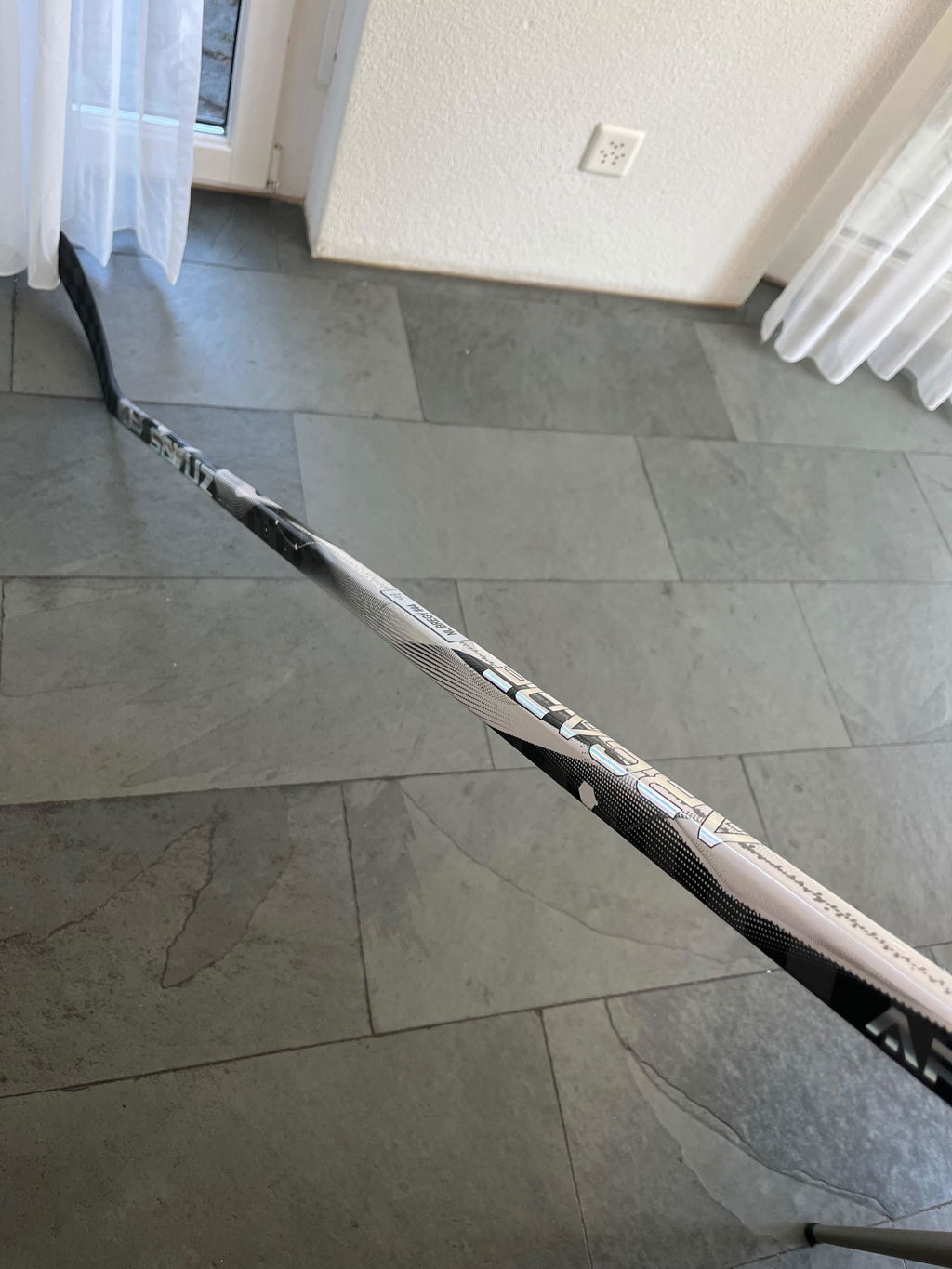
SOYUZ P92
Lie 6.5 or 7 · Mid · open face · round toe
2 lie options available
More lies and versions – click to enlarge


Bauer P92CCM P29Warrior W03True TC2
Available for:Standard modelsClassic SPR
Compare ↔
Find the curve you're used to at ABSHockey. Every SOYUZ curve with its lie value, characteristics and the equivalents from Bauer, CCM, Warrior and True.
The same curves active pros play. Search by your pattern, by the brand you play today, or by a player – or filter by curve type and model.
Straight to the most common curves: P92 P29 P28 P86 P90TM P92B P90 P28M P88 P02 P38 P80
Standard curve
 Standard curve


 Standard curve


 Standard curve
 ★ Pro favourite


 ★ Pro favourite

 ★ Pro favourite


 Popular with pros

 Popular with pros


 Popular with pros

 Popular with pros


 Popular with pros


 New
New New
New New
New New
New New
New New
New New
New New
New New
New New
New New
New New
New New
New New
New New
New New
New New
New New
New New
New New
New New
New New
New New
New New
New New
New New
New New
New New
New

 New
New New
New New
New New
New New
New New
New
 New
New New
New New
New New
New New
New New
New New
New New
New New
New New
New New
New New
New New
New New
New


No curve found. Try a shorter search term or reset the filters.
You don't need to know the SOYUZ names. There are three routes to your curve, and all three lead to the same place:
If you have two favourites and can't decide, put them on top of each other in the curve comparison and see the differences in curvature, face angle and lie at a glance.
The lie is the angle between the shaft and the bottom edge of the blade. It determines whether the blade sits flat on the ice when you stand in your normal posture. Each lie step is roughly two degrees: the higher the number, the more upright the shaft stands.
| Lie | Angle (approx.) | Suits |
|---|---|---|
| 4 – 5 | 137° – 135° | low, far-extended stance, puck further from the body |
| 5.5 – 6 | 134° – 133° | slightly forward-leaning standard stance |
| 6.5 – 7 | 132° – 131° | most common range, puck relatively close to the body |
| 7.5 – 8.5 | 130° – 128° | upright stance, puck handling close to the skates |
You don't have to work the value out – your current stick tells you. Look at the tape or the wear on the bottom edge of the blade: if only the toe wears down, your lie is too low. If only the heel wears down, it's too high. Even wear across the whole bottom edge means the lie fits.
In this guide, 127 of the 129 curves have lie values listed, from 4 to 8.5. By far the most common range is 6 to 7 – 48 curves sit there. For the remaining 13 curves the lie is not documented yet; in that case just ask before you order.
The curve type describes at which point along the blade the curvature begins. It is the property with the greatest influence on how a blade feels.
| Type | Curvature begins | Character | Curves in the guide |
|---|---|---|---|
| Heel | at the heel | long contact area, very direct slap shots, plenty of control on the backhand | 9 |
| Heel-Mid | between heel and middle | compromise between slap shot stability and puck control | 10 |
| Mid | in the middle | the all-rounder: balanced for passing, wrist shots and backhand | 29 |
| Mid-Toe | between middle and toe | quicker release than mid, lifts the puck more easily | 23 |
| Toe | at the toe | maximum lift and spin, strong for toe drags and snap shots, demanding on the backhand | 4 |
As a rule of thumb: the further the curvature moves towards the toe, the easier it gets to lift the puck quickly – and the more practice the backhand takes. If you shoot a lot from the blue line, heel or mid is usually the better choice.
Two further details appear on every card:
20 of the 129 curves list at least one equivalent from a major brand: 19 for CCM, 16 for Bauer, 11 for Warrior, 4 for True. The most common switches:
| SOYUZ | Lie | Bauer | CCM | Warrior | True | Known from |
|---|---|---|---|---|---|---|
| P90TM | 7 | P90TM | P90TM | W90TM | T90T | John Tavares |
| P28M | 6.5 | P28M | P28 + 1/4 | – | – | Moritz Seider |
| P88 | 6 | P88 | P40 | W88 | MC | Patrick Kane |
| P50 | 7 | P86 | P86 | – | – | Trevor Zegras |
| P62 | 6.5 | – | P19 | – | – | Ryan Nugent-Hopkins |
| P02 | 5 | P02 | P20 | W02 | HCS | Niklas Kronwall / Ryan Kesler |
| P19Y | 6 | P19Y | P46 | – | – | Patrice Bergeron |
An example of the path across brands: the Bauer P92 is called P29 at CCM, W03 at Warrior and TC2 at True – with us you'll find it as P92. If you play a Bauer P28, you end up at the SOYUZ P28; if you play a CCM P29, at the P29.
Four curves in the guide carry the "+1/4" suffix: P28 +1/4, P28 +1/4 in lie 6.0, P29 +1/4 and P88 +1/4. This is not a different curvature profile but a blade that is a quarter inch taller on the same base curve. More surface means: a larger contact zone on the shot, more security when receiving hard passes and when blocking – at minimally more weight. If you're happy with your curve but would like a bigger blade, this is the right choice.
Every card states which stick models the curve can be ordered on:
Six of the seven models share the same blade selection – STD PRO, AURORA, ARCANE, RAPID, HIT GRIT and MASTER FRST. Only the Classic SPR has its own, smaller list, but with curves the other models don't offer. One exception in the other direction: the P92 is not listed for ARCANE, RAPID and MASTER FRST.
Four curves are marked as standard curves: P92, P29, P28 and P86. They cover most of the demand and are available with no minimum order quantity. All other curves run through Pro Custom: from 3 sticks up, at the same price as a regular custom stick. Details are with the custom sticks, and for larger quantities under team orders.
So you can judge how reliable the data is:
If something looks wrong to you or you can't find your curve: drop us a line, we'll look into it and keep adding to the database.
With almost every manufacturer the name is on the blade itself, usually on the back near the heel, sometimes on the shaft just above the blade. Typical markings are "P92", "P28", "W03" or "TC2". If you can't find anything, a photo of the blade from the side helps – then we'll identify it for you.
No, and that applies to all brand equivalents. It is the blade that comes closest to the Bauer P92 in curvature profile, face angle and toe shape. Small differences in depth and lie remain. If you want to switch very precisely, compare the outlines directly on top of each other in the curve comparison.
No. Every card lists the possible models under "Available for". 76 curves are available on the standard models – which includes the Master FRST – and 20 on the Classic SPR. All other blades are available as Pro Custom from 3 sticks.
Nothing. The price of a custom stick depends on the model and the size, not on the curve. With Pro Custom there is only a minimum order quantity of 3 sticks.
The curve type says where the blade curves (heel, middle, toe). The lie says at what angle the blade sits on the shaft. Two blades can have the same curve type and still feel completely different because their lie is one step apart.
Yes, all curves are available left-handed and right-handed. The images show one version each; the shape is identical when mirrored.