Sébastien Reuille interview: 1000 games, a championship and a warrior's mindset
New appointment with ABSHockey interviews, a new exceptional guest.
Not everyone can boast a high-level professional career. Even fewer players can say they have reached 1000 appearances in the National League.
A warrior, a true leader on and off the ice. A truly pleasant chat that leaves plenty of food for thought also on real life.
The guest? None other than Sébastien Reuille!

The early years: Morges, Lausanne and Kloten
Séb, let's start with a very general question. How did your player career begin?
I could even start before my career actually began. My dad was a professional hockey player. During his career, he played in La Chaux-de-Fonds, Kloten, Davos, Lugano. He was the backup goaltender in the very first year Lugano was promoted to Serie A, if I'm not mistaken in the '82-'83 season. Basically, understudying a certain Alfio Molina.
So I lived in Lugano for a year. I was 2 years old. Then we moved to the French-speaking part of Switzerland. Things were different back then, anyway. True professionalism didn't exist yet. Besides playing hockey, you had to work. My dad worked in a bank and had received a job opportunity, so we moved. He played for a couple more years and then ended his career around the age of 30.
So you followed your dad throughout his career?
You could say that. I was very little. I remember he put me on skates in Morges, on the outdoor rink. I was 3-4 years old. That's where my career started. My dad was also my coach in the early days. In Morges until I was 14, when I went to play in the Juniors Elite of Lausanne. It all seems so fast when you think about it now. Then, after a year, Kloten came looking for me. I finished my compulsory schooling and left immediately. From 15 to 17 I played in Kloten's juniors. From 18 onwards I started breaking into Serie A.
So you took your first steps in Serie A in Kloten?
Exactly. I alternated between both: juniors and Serie A. I remember it was wonderful in Kloten. The coaches were very professional. Development opportunities for kids were incredible. If you think about it, Lausanne was in Serie B at that time, and so were Geneva and Biel. The same went for the junior categories. To make a long story short, if you wanted to "make the jump," you had to go to the German-speaking part. As I was telling you, development opportunities in Kloten were significant. Serie A was in its golden years. Just to give you an idea, these were the years when they came off 4 consecutive titles (from 1992 to 1996), with Reto Pavoni in goal, Roman Wäger, Peter Schlagenhauf, Felix Hollenstein.
For a youngster like me, it was ideal. At the same time, though, it was complicated to find ice time for us youngsters. I played, but not much: 4-5 minutes per game. There weren't many opportunities to showcase yourself.
Then I chose to go to Rapperswil. I chose a team that was theoretically less strong, but one that would give me many more minutes of playing time.
I thought: "Maybe we won't make the playoffs, but I'll get ice time, I can develop and also play special situations like power plays and penalty kills." In Kloten that would have been very complicated.
Rapperswil, Lugano and the 2006 championship
How long did you stay in Rapperswil?
I spent 3 years there. 2000-2004. It went well. We had some really good seasons. And then the opportunity to go to Lugano came up.
I remember it well. In that case, we were the youngsters taking advantage of opportunities to practice with Serie A. By the way, that's where we met. What a team!
Oh yes! We were truly a very complete team. Youngsters and "veterans" all integrated very well. Very well-balanced. Larry Huras as coach and Ivano Zanatta as assistant. 2004-2005 and 2005-2006. 2006 was the year of the title. I remember Huras had been fired during the playoffs against Ambri in the quarterfinals. The team was then taken over by Ivano, with Harold Kreis subsequently coming in to lend support.
It was truly a great moment for my career and for all of us players. Little else to add.
I then played another season in Lugano (2006-2007) and afterwards returned to Rapperswil for 3 seasons. 3 somewhat disappointing seasons on a sporting level.
Then I had another opportunity to return to Lugano from 2010 to 2019.
1000 games in the National League
Man, you've come a long way. With an important milestone. At least 1000 games in Serie A. Not many have achieved this result, right?
That's true. But now the numbers are rising faster. When I started, 38/44 regular season games were played per season. Now they play 52 games + playoffs. If you go all the way, as we did in 2018 with Lugano, you end up playing almost 70 games in a single season. Naturally, this helps reach this goal sooner.
Added to this is the fact that you have to be lucky with injuries or even play when you're in pain. In any case, it's true that it's not for everyone. I think there are 14/15 players who have reached it in the National League in Switzerland.
Did you never think about playing outside of Switzerland?
Well, yes. Almost 30 years ago, when I was young (laughs), I went to Kloten and there I had the opportunity to go play in the Quebec Major Junior Hockey League. One of those truly great leagues, because it's made up of youngsters but also adults.
To this day it's very well known for being the NHL Draft league. Back then, though, the topic was a bit taboo. Very few people from Switzerland moved in that direction. There was no organization for it. Even financially it wasn't straightforward. For a 15–16-year-old kid to pack up and leave wasn't simple. So, we preferred to take the German-Swiss route. Development was interesting there anyway.
Did you always want to play as a professional?
To put it clearly, was it always your goal? Yes, as a kid the dream was to go to the NHL. You can't say I wasn't ambitious. I had all of Don Cherry's VHS tapes which I watched continuously. For those who are older like me, they know what I'm talking about.
My luck, like for many, was being able to play in the National League because someone got injured. I remember going with my buddies to the curve in Kloten to watch the games. I was there the time Felix Hollenstein took that bad check that almost cost him an eye. Half an hour later I received a call informing me that the next day I would practice with Serie A. That's actually how it all started. In Juniors A I was playing great and that helped me be among the top choices for the category jump.
Did you always play as a forward?
Yes, always. I remember as a youngster playing matches against Flavien Conne or Thibaut Monnet, for instance, that ended 7-6. Maybe I scored 5 goals and they scored 6, rather than the other way around. It almost seemed like whoever scored the most goals made their team win. Puck behind the net and doing "coast to coast."
It must be said that we were also stronger because we trained much more than others. With the team, practices were twice a week.
Today kids train 4-5 times a week too. We trained I think 6 times a week, in any category. Always on skates.
I'll also add this anecdote. In the '94 and '95 season I went to play the Peewee tournament in Canada, in Quebec. My dad had bought me a pair of inline skates. They didn't exist in Switzerland yet. I went out on the street with skates and people looked at me like I was an alien. I trained by skating uphill.
To this day I sometimes tell my dad, "You missed a business opportunity!" Also, because in the following 2 years they started becoming wildly popular (smiles).
From goal scorer to warrior
Instead, what kind of player were you during your career?
My role changed over time. In the juniors, for example, I was an offensive player with a nose for goals. A power-play guy, so to speak. Then the years pass and you have to adapt to a different game.
I had to find a role that could last over time. If I kept my mind fixed on a purely offensive role, it's likely my career would have ended much earlier. Or maybe I would have gone to Serie B to keep producing offensively.
It's very important to know how to adapt your role. I always managed to keep the touch to find the back of the net, but I concentrated on a more defensive role. Over time I became that player capable of blocking opposing shots on the penalty kill, of sacrificing myself for the good of the team.
I'm curious to understand how you managed to make this transition. Towards the end of your career, the crowd cheered you for your sacrifice role. How did you pull it off?
I will always remember Larry Huras in Lugano. I was coming from Rapperswil. I won't hide it from you. There I felt a bit like the "little prince," who could do whatever he wanted knowing everything would go fine. For example, I remember I didn't even pay special attention to my diet.
So, I thought I'd arrive in Lugano in 2004 and do the same. Needless to say, during my first year in Lugano I was brought back down to earth pretty quickly. Huras didn't give me much ice time. At the end of the season, along with Tiziano Muzio, they came up to me and Larry told me, "Either you start working seriously right now, or your career will end shortly." Just like that, no beating around the bush.
Tiziano then took me aside and told me, "Well, you heard Larry's words. This summer there will be dryland training with the team. You and I are going to do one or two extra workouts together. Just you and me." He made me train hard. I think I put on 6/7 kg of extra muscle. Initially on the ice it was tough at first. But I was much physically stronger. And that also helped me mentally.
The coach immediately saw this change and in the 2005/2006 season I made a huge step forward in my career.
It's worth spending two words on Tiziano Muzio (who unfortunately is no longer with us now), HCL's historic athletic trainer. I was young, but I still remember how hard workouts were with him.
And imagine I did two extra workouts with him!
We'd meet in the morning to go around the lake. Just Tiz and me. So many memories (smiles). He really wanted to help me. I think he saw something in me. I almost felt like crying at the end of a workout with him.
What amazed me was that he didn't just limit himself to telling me what to do. He did it with me. I must say this phase definitely helped me build my career. It instilled in me the warrior mentality that I carried with me over the years.
It was a really tough moment. But today I'm truly grateful for it. Larry's words on one side and Tiziano's help on the other. Incredible!
Did you feel pressure on you at that moment?
I don't think I can say I felt pressured. Surely, I asked myself questions. "Maybe I should go to a quieter club?" No! I want to stay at a big club. I wanted the title. And so, I put in everything I had. This then helped me also because later I played in the All-Star Game and started integrating into the National Team.
NHL Draft and the national team
You anticipated me. That was my next question. The National Team.
I think I could have opened some doors that then never opened. The first one was the NHL Draft. I was about 18 years old. But for some reason something went wrong...
I hear a bit of regret in your voice when you say that. Am I wrong?
Yes, because in a normal situation my European Draft position in those years should have led me to the American Draft. But, as I told you, something didn't work. I think it was an oversight of some paperwork to be sent. I remember we fired my agent at the time right away.
You don't enter the Draft with pretensions, let's be clear.
But seeing the dream vanish, even just for the thought of having made it in, due to a technical error, wasn't nice. Then think, once the Draft is removed, the only other possibility to get "noticed" is the National Team.
And here opens another chapter that, if you want, I can tell you.
And who's going to stop you, Séb...
I always played on the national team, up to the U20s. I then played a few games with the senior National Team. There I had a particular incident.
I said something to the newspapers that I shouldn't have. I think I said something concerning my lack of playing time granted on the national team. When you're 20, you're the thirteenth forward and you still manage to score a goal and an assist in the little space you have, maybe your hunger to succeed comes out and that right "arrogance" that pushes you. Something like "too bad I was thirteenth, I could have done even more."
I remember the coach immediately called me telling me that first of all I had to be grateful to be able to be part of the national team, instead of complaining about my ice time. My Swiss adventure let's say stopped there. Also because, unluckily for me, the coach then stayed the same for the next 10 years.
From 20 to 30 years old then, at the top of my career, I found no space. I got it for a few games after 30, but it's clear I was no longer at my peak. On top of that, it was the time when Swiss NHL players were also arriving in the National Team.
I think I summarized the situation well. In the end, I remain among the few players who have made more than 1000 appearances in the NLA. First of all, I am happy and feel privileged for the path I've taken. Draft, National Team, teams outside Switzerland or the NHL dream are just small commas made of "ifs, and what-ifs, and if only." And you don't live on "ifs."
The 2016 and 2018 finals: what brings a team together
So, at my own risk, I'll stay on the "painful subjects" theme since you're warmed up. Title in 2006, then another chance in 2016 and 2018. Can we talk about it?
All right... (I don't know how to put a "painful subject" face into words. I'll leave the imagination to you). The other day I was with Julian Walker. It stings when we think about it. At least I won a title in 2006. He can't even say that. It hurts, for him, and for me as his teammate.
It was the second final. Okay, 2016. But what we lived through as a group in 2018 was incredible. The strongest emotion of my career. We were an exceptional group. We had lost 3 truly important players before the playoffs: Dario Bürgler, Damien Brunner, Alessandro Chiesa. All out for the rest of the season. It was the last regular season game against Davos.
I don't know what triggered inside us. We played that game as if we were already in the playoffs. I think the opponents thought we were crazy. It was a game that didn't matter anymore in terms of standings. We played for our injured teammates, almost out of retaliation. We wanted to be ready for anything. We were united for each other, all of us. We knew we didn't have the best roster, but we simply didn't care.
Big question now. How do you build a team so united, with the desire to go all the way and play everything out? It seems to me this doesn't always happen.
It's extremely hard. Basically, you have to have a group made of people ready to go "to war" together.
If you have stars inside or players who feel superior, you already start off wrong.
Then there are individual events. Every game, especially in the playoffs, is made of events that build the group and the journey. It grows from game to game.
Perhaps the key is being aware that a single event can help you, no matter if it's positive or negative. Three players so important to the group, injured, shouldn't be a positive event. It wasn't for them individually, but it strengthened the group. Everyone had to give a little more. Our fourth line emerged. And the team leaders integrated them as a fundamental part.
In the playoffs, whether you win or lose a single game, emotions aren't shown. Five minutes later, the head is already on the next game. This is the path to show. Or at least that's what works. But I didn't invent it. I learned it over the years.
In 2006 we always ate at the rink before the game. I was sitting laughing and joking. Ronnie Rüeger arrives: "What are you laughing at? We haven't won a shi... yet. Think about the contribution you want to give tonight! All of Lugano wants this victory, they're shouting it at us!" Over time I learned to value words of this kind.
Beyond this example, is there any player who showed you the way?
There are really many. A true leader doesn't yell at you. He does the right things and shows you what needs to be done. My first year in Lugano for me was 2003. The team had reached the final.
I arrived about 1 week after the end of the championship because I had finished earlier and needed to train. I walk into the weight room and find Régis Fuchs and Sandy Jeannin. One week after the final!
No Maldives, no break. They were training right after a lost final. These are people to follow and who make you grow, showing you what needs to be done. But I can cite really many of them, and I don't want to leave anyone behind.
Maybe I also gave some examples towards the end of my career. I wouldn't know. Maybe someone sitting in this chair will say so in a few years. But I learned first of all. I don't like big words about this. The group is the group; you have to live it.
Injuries and how hockey has changed
You also went through several injuries, right?
Yes, I had one particularly heavy one, to the face. I remember though I came back after 3 weeks. I started by taking a shift every 20 minutes, where I had even scored. Then, always that year, 2012 if I'm not mistaken, I had a great playoff run. Almost as if positive karma had come back to me. Let's say it was a tough injury because it compromised my face and teeth, but fortunately with a quick recovery.
Then I had others may be less visible but that kept me out for longer, even several months off the ice.
Let's say on the face you know what you broke and you're aware everything will go back to how it was. When instead ligaments fracture, or non-visible areas, there is always great uncertainty about how the situation will evolve.
I never let myself get down by injuries. Even for the face, 80 stitches inside and outside the mouth didn't stop me from getting back on the rink. Just think, I had lost 7 kg of weight in two weeks. My wife did everything to help me. We even tried putting meat in the blender. Gross. I then adapted with tartare and finely cut pasta. I needed energy and had to eat food that I didn't have to chew too much.
How much has hockey changed since you started?
It has changed a lot. Much faster. Equipment has also changed a lot. We were talking about sticks earlier. Today they are like a feather. And shots are really like bullets with great precision.
Then, if I must be honest, physical preparation and the professionalism of the guys has had an incredible spike. In the past, those who could skate better than others immediately had a great advantage.
Today guys are first of all sports athletes. The difference is made with fast decisions, moving in tight spaces. Once we grabbed the opponent with the stick to stop them. It was probably normal practice. Today it's a full-blown penalty. Defenders were tall, big, and heavy. But with a little speed and a small deke you could beat them.
Was hockey tougher before?
It was different. Surely tougher in terms of checks. But level-of-risk-wise I wouldn't say so, precisely because the game was slower. To give you an example, driving a car at 20km/h into a wall compared to 40km/h has a totally different impact. Paradoxically we hurt ourselves less before despite the game being tougher. The real risk is speed, at least in my opinion.
If I told you to imagine going back to 20-year-old Seb and stepping into a game now, do you think you could be a good player?
Honestly yes. I had speed and this aspect today would really help me a lot. I think I'd like to measure myself against modern hockey. Speed, vision, creativity. Yes, it's a really nice thought to have.
The locker room then and now
I have another question concerning change over the years. Has the locker room changed too? In terms of environment and type of relationship between teammates?
This is truly an excellent question! It has changed so much.
This pushed me to decide to stop permanently, instead of maybe continuing in Serie B for a few more years.
The locker room is family, the good relationship between teammates. I'll be honest. What changed everything unfortunately is the cell phone.
Without beating around the bush. When I was in Rapperswil there were Marco Capaul, Markus Bütler (who is now the CEO of the company), Thomas Walser, as well as others. We bought cookies, beers, and a lot of other things. On the way back on the bus we talked about the game, what happened, our families, life off the ice. We hung out together.
Then the cell phone arrived. As long as it was limited to sending messages no problem.
But I'd say from 2015, with Netflix, Instagram, Facebook, and apps in general, everyone started staying in their corner, isolated in their world. At the end of their careers only us of the old guard stayed together and bonded as a group. So, bring on a bottle of wine and a chat, right?
When we had practice in the morning and then again in the afternoon, we didn't go home. We ate together and had a deck of cards after coffee. Maybe not every day, but often. This created good relationships and energy. Few youngsters still know how to play Jass today.
In a Serie A locker room, there is also a risk of language groups. Foreigners on one side, Ticinese on another side, rather than French or German speakers. We need to find a way to involve everyone. Language must not be a barrier.
A short time ago I had an evening out with the Lugano guys. The locker room is going back to bonding as a group. The result on the ice then shows. Less isolationism and cell phones. Being together and learning to genuinely care for each other. I can sign my name on that!
Retirement and life after hockey
How difficult was it, as the saying goes, "to hang up the skates"?
Making the decision wasn't so complicated. I would have already done it a year earlier if we had won the title in 2018. Unfortunately, it didn't happen but the club granted me an extra year of contract. This made me happy.
It allowed me first of all to reach the milestone of 1000 appearances, but above all to prepare myself mentally. The decision was already made in advance then.
But when you reach that moment where it actually happens, it's not easy at all. Fortunately, as I said, I had time to prepare, both mentally and to organize myself on a work level. I wouldn't want to be in the shoes of a player who finishes his career, maybe after 20 years, and has no perspective.
There are very few players who can live off what they accumulated in their career. It's sometimes difficult in NHL (between costs borne by players and high taxes), let alone in Switzerland. Not to forget that there are at least 30 years ahead before reaching retirement.
Aspects to reflect on. Finished playing, a new life begins. And you start from scratch. Returning to the game, during the Regular Season you don't think much about the fact that it's your last season. But during the playoffs your head knows that every game could be your last. You know you have nothing left to prove. You're close to "retirement." An athlete experiences this moment between 33 and 38 years old, knowing that afterwards, however, you are nowhere near retirement. The emotions of sport are no longer there.
Today for example, if I sell a house, I don't have the crowd applauding me. Nor do I show up the next day in the office with a medal around my neck (we both laugh).
However, I can tell you that my sports career helps me immensely in the working environment. To integrate, to work in a team, to fight adversity, to never give up, to focus on important things. It's a very useful resume to which technical skills must be added.
How Sébastien Reuille watches hockey today
I'll close with ABSHockey's customary question. We represent a site that deals with the trade of hockey products. Specifically sticks. We watch games and the eye catches the type of stick even before the game. In what way, as an icon of Swiss hockey, does Sébastien Reuille watch hockey games?
With a beer in hand! (laughs)
Many ask me if I miss playing hockey.
Honestly, I have so many things to think about now that I don't even dwell on it. Plus, I wouldn't have the physique anymore to be able to play at certain levels. This awareness helps. Today I have a job and a family. I am a happy person.
How do I watch the actual game? I experience the game.
When I can, I really watch almost every hockey night, of all teams. You can ask me info about players and standings and I know how to give you the answer. The passion remains. I watch the game, who has a more defensive system, who has more puck possession. I manage to catch the flows of the game. I like seeing how a team plays on the power play rather than the penalty kill.
The best thing is watching games with people who follow hockey but don't know it as deeply or maybe haven't played in the league for 20 years. I sometimes have fun announcing what's about to happen a few seconds in advance. "that's offside," "that's a penalty," "you'll see the referee will validate the goal for this or that reason." I see many things that those who haven't experienced the game firsthand fail to grasp. We see it at first glance in a very natural way.
Sometimes though I also watch games in a quiet corner, to enjoy the match. And on top of that I follow NHL teams where Swiss players play and also the Swiss League, given that I was Sport Director for 5 years.
Hockey remains the most beautiful sport for me!
Truly a wealth of experience to share. Written interviews don't capture the small expressions or emotions that arise during the chat. As a player and fan of this sport, I am happy to share the story and small real anecdotes from people who have experienced them firsthand. Good luck Séb for your new professional career. We thank you for dedicating your time to us! Until the next episode and the next chat!
To find out more about Sébastien Reuille, who now works in real estate and is active in politics in Lugano, visit his website sebastienreuille.ch.
More ABSHockey interviews
- Paolo Duca Interview: From Captain to Sports Director at Ambrì
- From Player to Coach: Luca Gianinazzi’s Journey and Vision
And if you want to know which stick suits your game: try our Stick Finder or check out our custom sticks.

 SOYUZ HIT GRIT
 SOYUZ AURORA
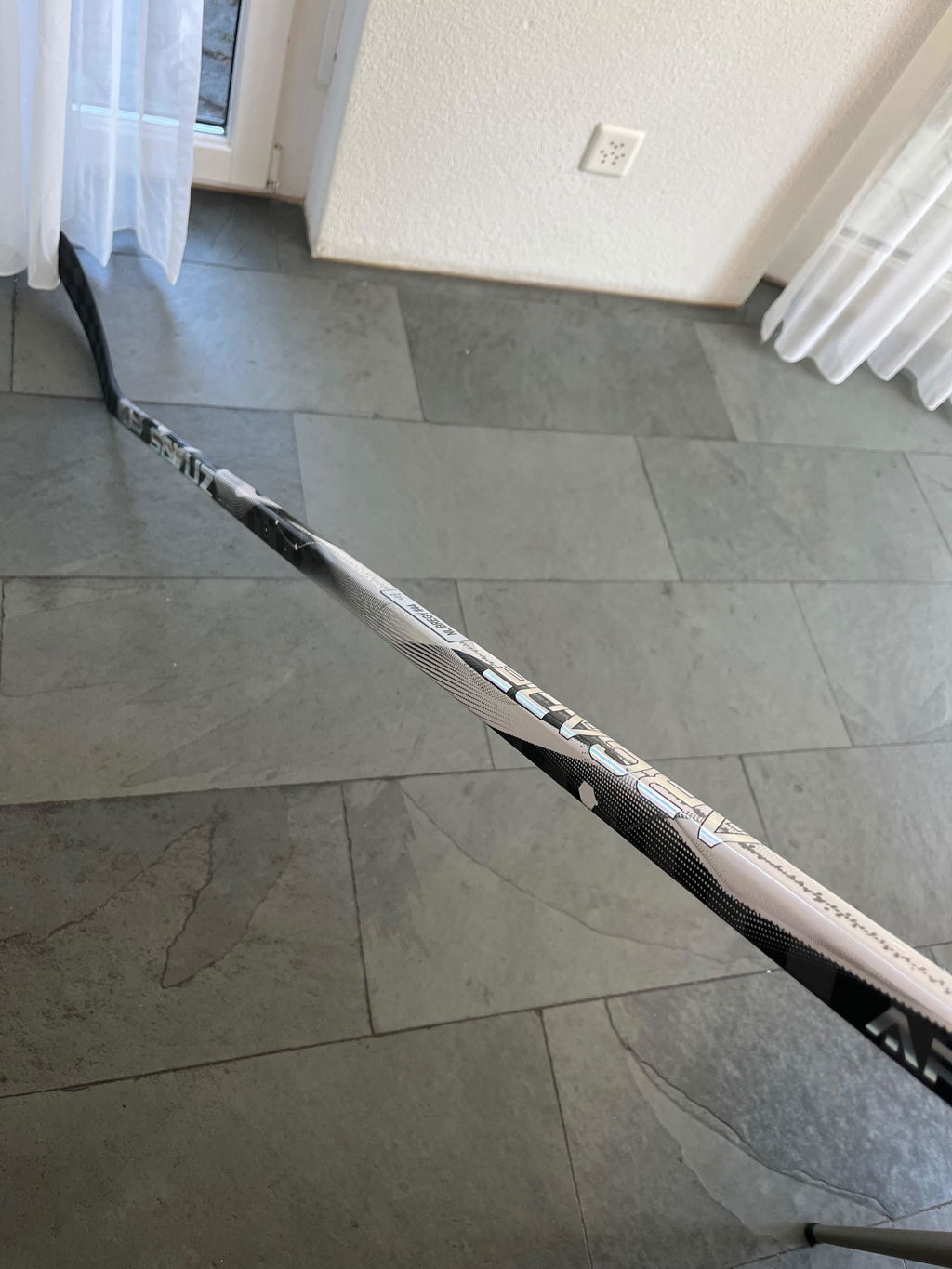
 SOYUZ ARCANE