5 Common Mistakes When Buying an Ice Hockey Stick
5 Common Mistakes When Buying an Ice Hockey Stick
(And How to Easily Avoid Them)
Introduction
Buying a new ice hockey stick seems simple – but it’s not.
Many players (and parents) choose a stick based on brand, price, or recommendations. The result: weaker shots, less control, and a stick that wears out faster than necessary.
➡️ New here? Check out our complete Hockey Stick Guide
👉 Here are the 5 most common mistakes when buying a hockey stick – and how to avoid them.
Mistake #1: The Flex Is Too Hard

The most common mistake by far.
Many players think: “The stiffer the flex, the more power.”
Wrong ❌
A flex that’s too stiff:
- Doesn’t load properly
- Reduces shot speed
- Puts unnecessary strain on hands and wrists
Rule of thumb:
Flex ≈ body weight (kg)
How to avoid this mistake
Choose a flex you can actually bend in-game – not just in the gym.
➡️ Tip: With custom sticks, you can fine-tune the flex exactly to your needs.
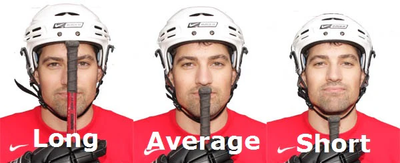
Mistake #2: Incorrect Stick Length
Too short = less reach, encourages poor posture
Too long = worse technique, less power, incorrect lie (blade only touches the ice at the heel)
Many players buy a “standard length” and never adjust it.
Reference (without skates):
Stick end between chin and nose
How to avoid this mistake
- Beginners & Juniors: slightly shorter
- Advanced players: depends on playing style
➡️ A custom-fitted stick prevents technical problems from the start.
➡️ Learn more about stick length
Mistake #3: Buying a Brand Blindly
“I play Bauer because everyone plays Bauer.”
“My teammate uses CCM, so I’ll take CCM.”
Big brands are good – but not automatically good for you.
The problem
- Standard flex
- Standard curve
- Standard grip
➡️ You adapt to the stick – not the other way around.
Better solution
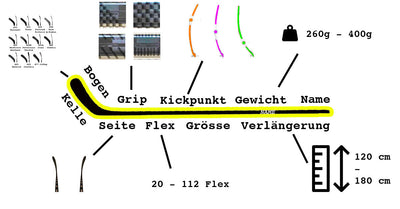
Choose specs instead of brand:
- Flex
- Curve
- Kick point
- Grip
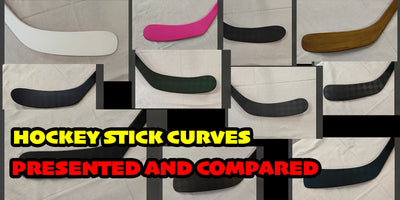
Mistake #4: The Wrong Blade (Curve)
The blade affects:
- Puck control
- Shot accuracy
- Backhand performance
Many players use a curve that doesn’t match their playing style.
Examples
- Too open → shots go over the net
- Too flat → little lift on shots
ℹ️ Note: Modern curves like P92M or P29 + 1/4 feature a taller blade, which can significantly affect shooting and puck control.
👉 Taller hockey stick blades – real advantage or just marketing?
How to avoid this mistake
- Beginners: neutral curve
- Shooters: slightly more open curve
- Playmakers: more control-focused curve
➡️ Custom sticks allow you to choose exactly the curve that fits your game.
➡️ All blade curves explained in detail
Mistake #5: Ignoring (or Choosing the Wrong) Grip
Grip is not just a “nice to have”.
Too little grip:
- Less control
- Unstable feel
Fact: Some players prefer less grip because it allows the hand to slide more easily on the shaft.
Solution
Choose your grip based on your playing style:
- Quick & technical: lighter grip
- Power & control: stronger grip
Conclusion: The Perfect Stick Adapts to You – Not the Other Way Around
Most problems when buying a hockey stick happen because players are forced to compromise.
With a personalized ice hockey stick, you can:
- Avoid all 5 mistakes
- Shoot better
- Gain more control
- Save money in the long run
👉 Build your own custom ice hockey stick
(Flex, length, curve & grip tailored exactly to your needs)
Further Guides & Configuration
This article is part of our big Hockey Stick Guide. Also relevant: 7 facts on stick choice and the right flex.



 SOYUZ STD PRO INT
 Ice hockey stick INT 375g
 Lunar 1.0 JR