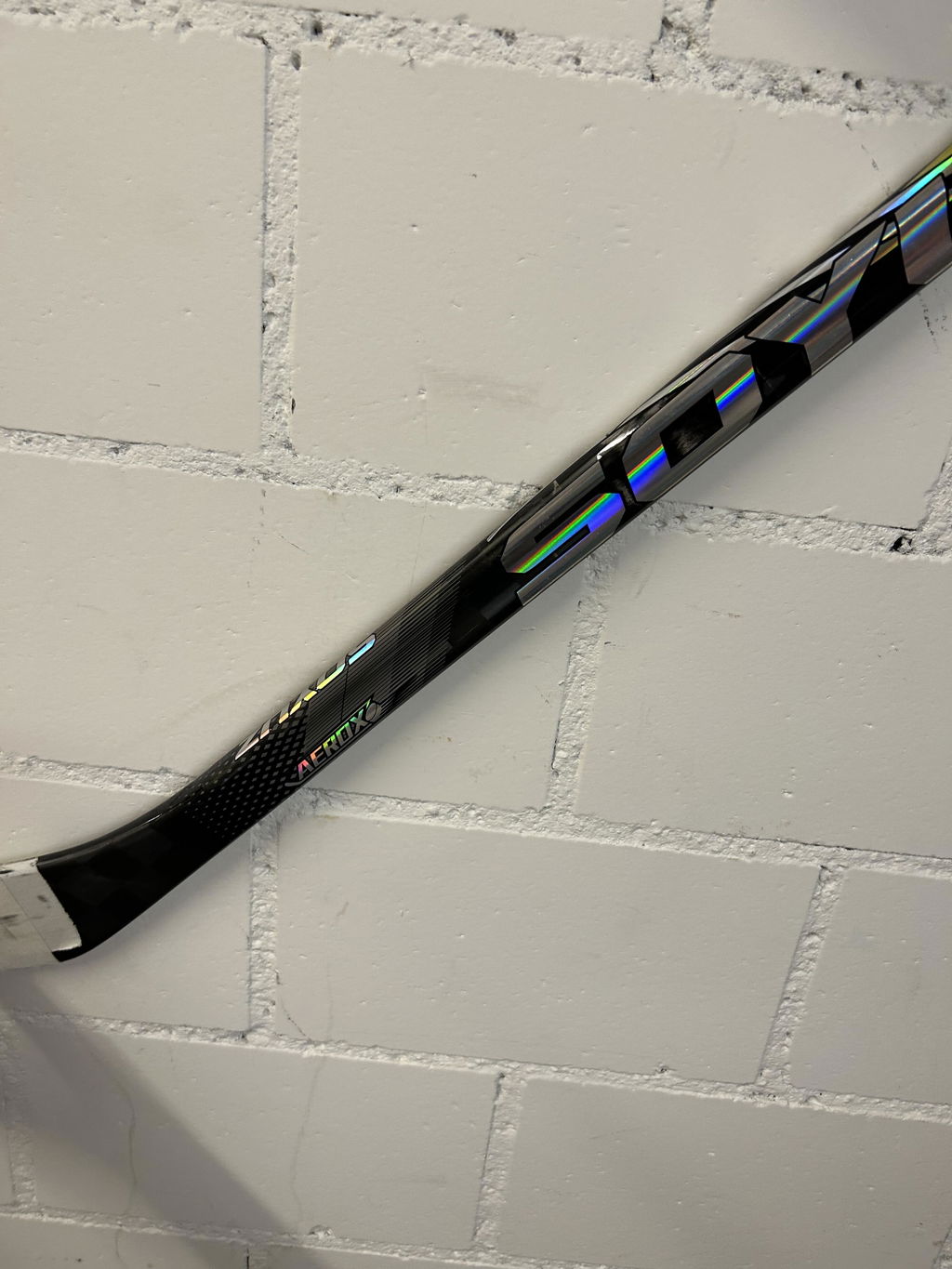
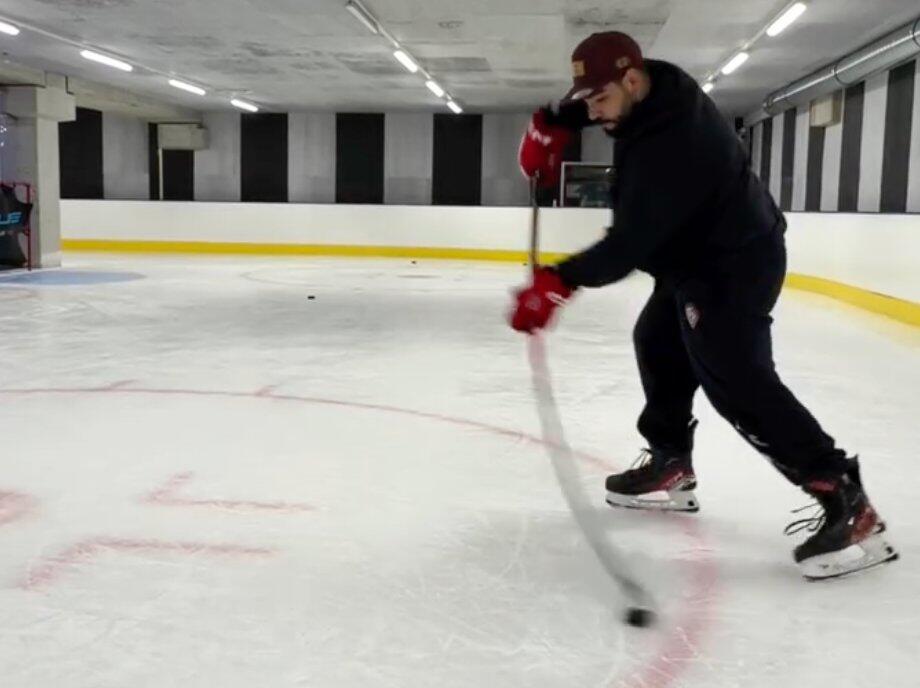
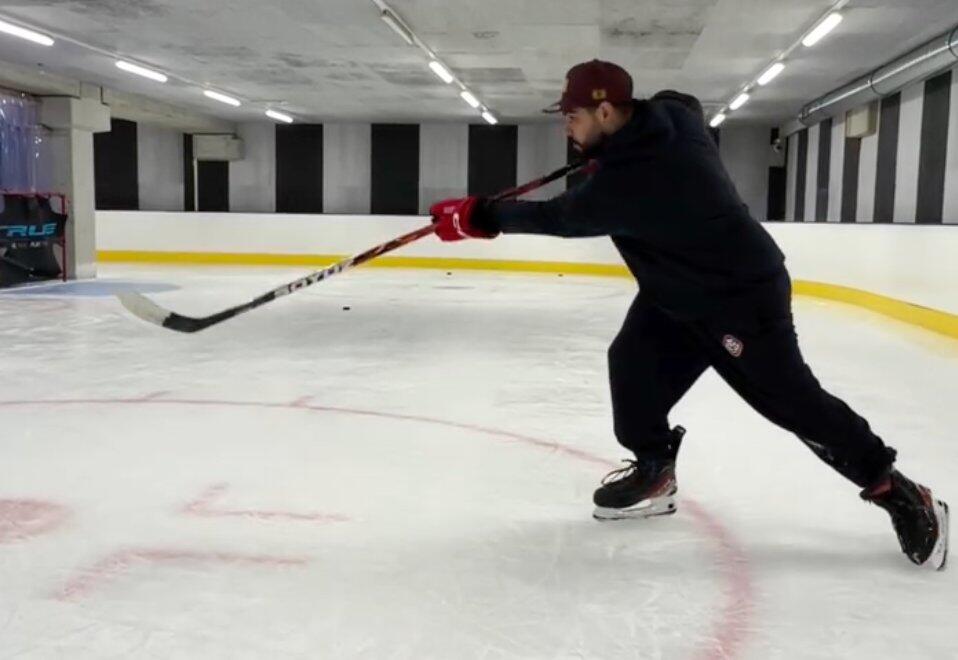
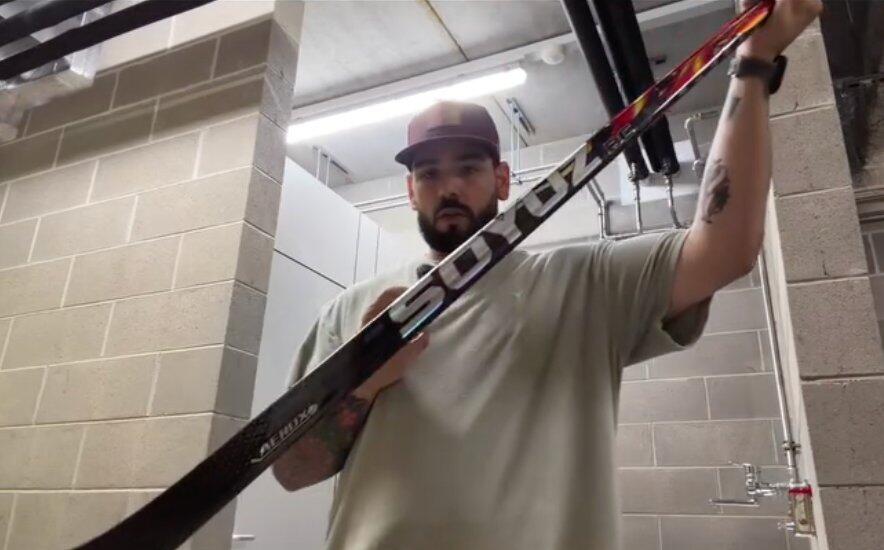
P90TM Curve – The Modern Mix Between P28 and P92
The P90TM answers a question thousands of players ask themselves: “I want the toe feel of the P28 – but without its drawbacks.” Geometrically it sits exactly between the P92/P29 and the P28: faster release and more toe dynamics than the P92, but more predictable than an uncompromising P28. In this guide we break it down completely – technology, on-ice feel, an honest rating of every discipline, a direct comparison with the P92 and P28 – plus a self-check that tells you in 30 seconds whether it suits your game.
Looking for a direct comparison? In our big blade guide we compare P90TM vs P92 and P28 head-to-head – with an interactive curve-compare tool. You'll also find P92 vs P28 and every other matchup in one place.
What exactly is the P90TM?
The P90TM is a mid-toe curve with an open face – a deliberate hybrid design. The curvature starts in the middle of the blade like on a P92, but shifts noticeably towards the toe. The result is a pattern that guides the puck further along the front section of the blade than a classic mid curve, without the uncompromising specialisation of a true toe curve.
At ABSHockey this pattern also goes by the name A90TM – it refers to the same profile. You can configure it in Senior (SR) and Intermediate (INT).
| Property | P90TM / A90TM |
|---|---|
| Curve type | Mid-toe (hybrid) |
| Face | Open |
| Toe shape | Round |
| Curve depth | Medium |
| Lie | 5 (standard) – also available from us in lie 7 |
| Ideal for | Quick release, shooting in motion, toe drags |
| NHL reference | John Tavares (hence also “Tavares curve”) |
| Available at ABSHockey | Senior (SR) and Intermediate (INT) |

The technology behind the curve
Three characteristics explain why the P90TM feels different from anything else:
1. Curvature towards the toe. The puck leaves the blade further forward. That shortens the path from puck contact to release – hence the noticeably faster shot. At the same time enough contact area remains in the middle, so the pattern never becomes as unforgiving as a pure toe curve.

2. Open face. The open face lifts the puck almost by itself. In front of the net, from close range and on quick shots you barely need a backswing to get dangerous elevation. The price: backhand and pass reception demand more touch.
3. Round toe. The round toe makes toe drags, tight moves and direction changes comfortable – a key reason why technically strong players get along so well with the P90TM.
If you still need to sort out the basics – lie, face, curve depth – you will find everything in our guide “Which curve is right for me?”.
Standard lie 5 – or lie 7
The lie describes the angle between shaft and blade. The higher the number, the more upright the shaft stands when the blade sits flat on the ice. Players with a very upright stance or greater height often get along better with a higher lie.

How does the P90TM play on the ice?
The P90TM is not an all-rounder – it is an offensive specialist with clear strengths and equally clear trade-offs. This is how we rate the individual disciplines:
Rating by the ABSHockey editorial team based on blade geometry and practical feedback. 5 = outstanding, 1 = weak.
Who is the P90TM ideal for – and who not?
The honest answer: the P90TM is one of the best curves out there – for the right type of player. But it is not a safe default choice like the P92/P29.
| ✅ The P90TM suits you if … | ❌ Probably not if … |
|---|---|
| you are torn between the P92 and the P28 | you want a safe, versatile default (→ P92/P29) |
| you often shoot in motion | you play a lot on your backhand |
| you want to get the puck up on net fast | flat, hard slapshots are your main weapon (→ P88) |
| you are technically strong and like toe drags | you are still learning the fundamentals |
| the P28 already felt too extreme to you | you want maximum neutrality and control (→ PM9) |
🏒 Self-check: what type of player are you?
Open the type that fits you best – and see whether the P90TM is your curve:
🤔 “I am torn between the P92 and the P28”
That is exactly why the P90TM exists. It is the middle ground: more toe dynamics and a faster release than the P92, but more predictable than the P28. If you have ever wondered whether there is “something in between” – this is the answer. Configure a SOYUZ with P90TM →
🎯 “I am a sniper – I want the fastest release”
Very good choice, with one alternative. The P90TM is extremely fast on the release. If you want the absolute maximum and are willing to compromise on backhand and pass reception, the P28 is even more specialised.
🪄 “I am a dangler – toe drags, tight moves, creative finishes”
Top choice. The round toe and open face support exactly this game: pull the puck onto the tip, change the angle, finish immediately.
🎬 “I am a playmaker – building plays and precise passing”
Borderline. Saucer passes work well, but for flat passes and pass reception the P92/P29 is the more forgiving choice.
🧊 “I am a defenceman – hard slapshots and a reliable backhand”
Probably not. For flat slapshots and a dependable backhand the neutral P88 or the PM9 is far better suited.
🌱 “I am just starting out”
Not yet. Learn the fundamentals first with a forgiving curve – the P92/P29 or P88. The P90TM rewards clean technique but forgives little.
P90TM compared to the P92/P29 and P28
The P90TM is best understood through its two neighbours. Here is the direct comparison:
| Feature | P92 / P29 | P90TM | P28 |
|---|---|---|---|
| Curve type | Mid | Mid-toe | Toe |
| Face | Open | Open | Open |
| Release speed | Fast | Very fast | Extremely fast |
| Lifting the puck | Good | Very good | Very good |
| Toe drags | Decent | Very good | Outstanding |
| Backhand | Decent | Decent | Demanding |
| Passing | Outstanding | Good | Demanding |
| Difficulty | Medium | Medium to high | High |
| Ideal for | All-rounders | Technical offensive players | Snipers & danglers |

P90TM vs. P92/P29
Both have an open face, but the curvature sits in a different place. On the P92/P29 it is central, on the P90TM noticeably further forward. In practice that means: the P90TM shoots faster and lifts the puck more easily, while the P92/P29 is clearly superior at passing and pass reception. If you see yourself as a shooter, take the P90TM. If you build the play, take the P92/P29.
P90TM vs. P28
This is about the degree of specialisation. The P28 is an uncompromising toe curve: the fastest release there is, but passing, pass reception and backhand keep challenging you. The P90TM delivers a large share of those toe advantages while staying far more predictable in the rest of your game. For most players outside the top leagues that is the better deal.
Advantages of the P90TM at a glance
- Very fast release – ideal when you have no time
- Puck lifts effortlessly, even from close range
- Strong on shots in motion and from tight angles
- Supports toe drags and creative puck handling
- The middle ground everyone looks for between P92/P29 and P28
- Available in lie 5 (standard) or lie 7
Possible drawbacks
- Backhand and pass reception require practice
- Flat, hard slapshots suit it less than the neutral P88
- More demanding for beginners than a P92/P29
- Switching from a P88 or PM9 needs an adjustment period
Does John Tavares really play a P90TM?
The P90TM is often called the “Tavares curve”, and the association fits the profile: technically strong, dangerous in front of the net, quick to finish. An important caveat: pro players almost always use individually customised blades. A retail P90TM is therefore not necessarily identical to what actually goes on NHL ice.
For you as a player the name connection is still useful – it describes well what type of player this curve was built for. Just how far retail and pro specs can diverge is covered in our guide to dressed sticks and pro stock specs.
Four situations where the P90TM shines
1. Finishing from the slot
Pass into the slot, no time, shoot immediately. The open face gets the puck up without a backswing – exactly the situation this curve was built for.
2. Attacking down the wing
Coming down the wing with speed, cutting slightly inside, finishing in motion. The toe-heavy curvature noticeably shortens the path to the shot.
3. Toe drag and shot
Pull the puck past the defender and finish straight afterwards. Round toe and fast release mesh perfectly here.
4. Rebound in front of the net
In tight situations every tenth of a second counts. Take the puck, lift it, place it – with no room for a clean backswing.
How to configure your SOYUZ
At ABSHockey you build your stick fully to measure. After the curve you decide on the two other big variables:
👉 Flex: How much stiffness suits your weight and shooting style? Our flex guide explains it.
👉 Length: Find the right stick length in the length guide.
👉 Overview: All specs in one place in the ABSHockey stick guide.
Ready for your P90TM?
The P90TM can be configured in Senior and Intermediate – flex, length and name bar freely selectable.
Configure your custom stick → HIT GRIT ARCANEOur verdict on the P90TM
The P90TM solves a very specific problem: it gives you most of what makes the P28 so dangerous on the finish, without punishing you throughout the rest of your game. For offensive players with solid technique who shoot a lot in motion, it is one of the strongest curves available.
It is not a default recommendation though. If you are unsure, pass a lot or play defence, you are better off with the P92/P29 or P88. If you want the uncompromising toe release, go for the P28.
In short: if the P92 feels too tame and the P28 too extreme, the P90TM is exactly your curve.
Frequently asked questions about the P90TM
What is the P90TM curve?
The P90TM is a mid-toe curve with an open face and a round toe. Geometrically it sits between the P92/P29 (mid curve) and the P28 (toe curve) and is designed for a quick release, easy puck elevation and toe drags.
Are the P90TM and A90TM the same?
Yes. “A90TM” is the ABSHockey designation for the same blade profile known in retail as the P90TM.
What lie does the P90TM have?
The standard is lie 5. At ABSHockey the P90TM is additionally available in lie 7 – interesting for players with a very upright stance or greater height.
What is the difference between the P90TM and the P28?
Both are toe-heavy with an open face. The P28 is the more uncompromising toe curve with the fastest release, but demands considerably more on backhand, pass reception and flat passes. The P90TM delivers a large share of those toe advantages while staying more predictable in the rest of your game.
P90TM or P92 – which should I choose?
If you mostly finish and shoot a lot in motion: the P90TM. If you build the play, pass a lot or want a safe all-round option: the P92/P29.
Is the P90TM suitable for beginners?
Only to a limited extent. The open face and toe-heavy curvature forgive less than a P92/P29 or P88. For getting started we recommend one of those two – the P90TM pays off once your fundamentals are solid.
Which NHL player uses the P90TM?
The curve is mainly associated with John Tavares, which is why it is sometimes called the “Tavares curve”. However, pros almost always play individually customised blades that can differ from the retail version.
Which flex suits the P90TM?
The curve does not change your flex choice – that depends on weight, height and shooting style. Details in the flex guide.
Is the P90TM good for slapshots?
Decent, but not its strength. For maximum flat and hard slapshots the neutral P88 is the better choice.
Which sizes is the P90TM available in at ABSHockey?
The P90TM can be configured in Senior (SR) and Intermediate (INT).
More curve guides
- P92 / P29 – the most versatile curve in hockey
- P28 – the toe curve for snipers & danglers
- P88 / Kane – the most balanced curve
- P86 / PRO9246 – the hybrid curve for offensive players
- P91A / Drury – the heel curve for power
- PM9 – the classic straight blade for maximum control
- Which curve is right for me?