The 9 Best Stretches for Hockey Players – Stay Mobile on the Ice
Few sports demand as much from your hips as ice hockey: a deep skating stance, explosive changes of direction, slap-shot rotation. Staying mobile here means a smoother stride and a harder shot – and gives groin and hip problems less to work with. These 9 stretches cover exactly the zones that work hardest in hockey: adductors, hip flexors, glutes, thighs and spine.
How to use this routine: Best after practice or a game, when your muscles are warm. Hold each position for 20–30 seconds (per side), keep breathing calmly, never stretch into pain. Before practice: keep it short and dynamic instead of long and static.
1. Kneeling Hip Flexor Stretch (Lunge)

The classic against “hockey hip”: the permanently bent skating position shortens the hip flexor – costing you stride length and pushing you into an arched lower back.
How to: Lunge position, back knee on the ground. Tilt your pelvis slightly backwards (squeeze the glutes) and gently push your hips forward until you feel the stretch at the front of the rear hip. Torso stays upright.
Hold: 20–30 seconds per side. Most common mistake: arching the lower back instead of tilting the pelvis.
2. Kneeling Quad Stretch

Your quads do heavy lifting on the ice – every acceleration, every deep stance. This variation stretches them together with the hip flexor.
How to: From the lunge, grab your back foot with the same-side hand and pull it towards your glutes. Hips stay pushed forward, knee points down.
Hold: 20–30 seconds per side. Most common mistake: the knee drifts outwards – the stretch loses its target.
3. Side Lunge (Cossack Squat)

The movement closest to your skating stride: one leg deeply bent, the other extended to the side – exactly how your adductors work on every push-off.
How to: Wide stance, shift your weight onto one leg and sink into a deep squat, keeping the other leg straight (toes pointing up or forward). Chest up, heel on the ground.
Hold: 20–30 seconds per side – or shift slowly from side to side. Most common mistake: the heel of the bent leg lifts off.
4. Deep Squat with Extended Leg

The more intense sibling of the Cossack squat: you work closer to the ground and stretch the inside of the extended leg along its full length.
How to: Drop into a deep squat, extend one leg to the side, fold your hands in front of your body or support them on the ground. Keep your weight calmly on the bent leg.
Hold: 20–30 seconds per side. Most common mistake: rounding the back heavily – better to stay a little higher and stretch upright.
5. Butterfly Stretch

The most direct route to the groin – the zone that bothers hockey players most often. Goalies benefit too: no open groin, no clean butterfly save.
How to: Sit upright, soles of your feet together, pull your heels towards your body. Let the knees sink towards the floor under their own weight – don't push. For more intensity, lean forward with a straight back.
Hold: 20–30 seconds. Most common mistake: collapsing forward with a rounded back.
6. 90/90 Hip Rotation

Tight games are decided in tight spaces – and that's where your hips need rotation. The 90/90 position trains internal and external rotation at the same time.
How to: Sitting, place both legs at 90-degree angles: front leg in front of your body, back leg out to the side behind you. Sit tall and lean your torso slightly over the front shin.
Hold: 20–30 seconds per side. Most common mistake: one glute lifts completely off the floor – support yourself and build up slowly.
7. Seated Figure-4 Stretch

Your glutes are the engine of your skating stride – and they tighten up accordingly. The figure-4 targets the glutes and deep hip rotators.
How to: Seated, place one ankle over the opposite knee (your legs form a “4”). Support your hands behind your body and bring your chest towards your legs until you feel it in the glutes.
Hold: 20–30 seconds per side. Most common mistake: pressing the crossed knee towards the chest instead of letting it sink to the side.
8. Lying Spinal Twist

After 60 minutes in a bent-over stance, your lower back wants a counter-movement. The lying twist unloads the lumbar spine and stretches the glutes and the side of your trunk.
How to: Lie on your back, bring one knee across your body to the opposite side, extend the other arm and turn your gaze towards it. Keep both shoulders on the floor as much as possible.
Hold: 20–30 seconds per side. Most common mistake: the upper shoulder lifts completely – reduce the rotation a little.
9. Thoracic Rotation on All Fours

Shot power comes from rotation – and rotation happens in the thoracic spine. If it's stiff, your body borrows the movement from the lower back. Not ideal.
How to: On all fours, place one hand behind your head or reach the arm towards the ceiling, rotate your torso open and follow the arm with your eyes. Hips stay stable.
Hold: 20–30 seconds per side, or 8–10 slow reps. Most common mistake: rotating from the hips instead of the ribcage.
When to Stretch – and How Often?
After practice or a game: the full routine, static, 20–30 seconds per position – takes less than 15 minutes.
Before hitting the ice: warm up dynamically (leg swings, lunges, hip circles). Long static stretching right before exertion can temporarily dampen explosive power.
On rest days: 2–3 exercises of your choice are enough to stay on track – consistency beats intensity.
Frequently Asked Questions
Does stretching help against groin problems? Mobile, resilient adductors are an important foundation – together with strength work. But if you're already in pain, that belongs with a physio or doctor, not on the mat.
How quickly will I notice a difference? With regular stretching (3–4× per week), most players feel more freedom in the deep stance after a few weeks.
Is stretching alone enough? No – mobility works best paired with strength. The deep squat and the Cossack squat can later be loaded as strength exercises too.
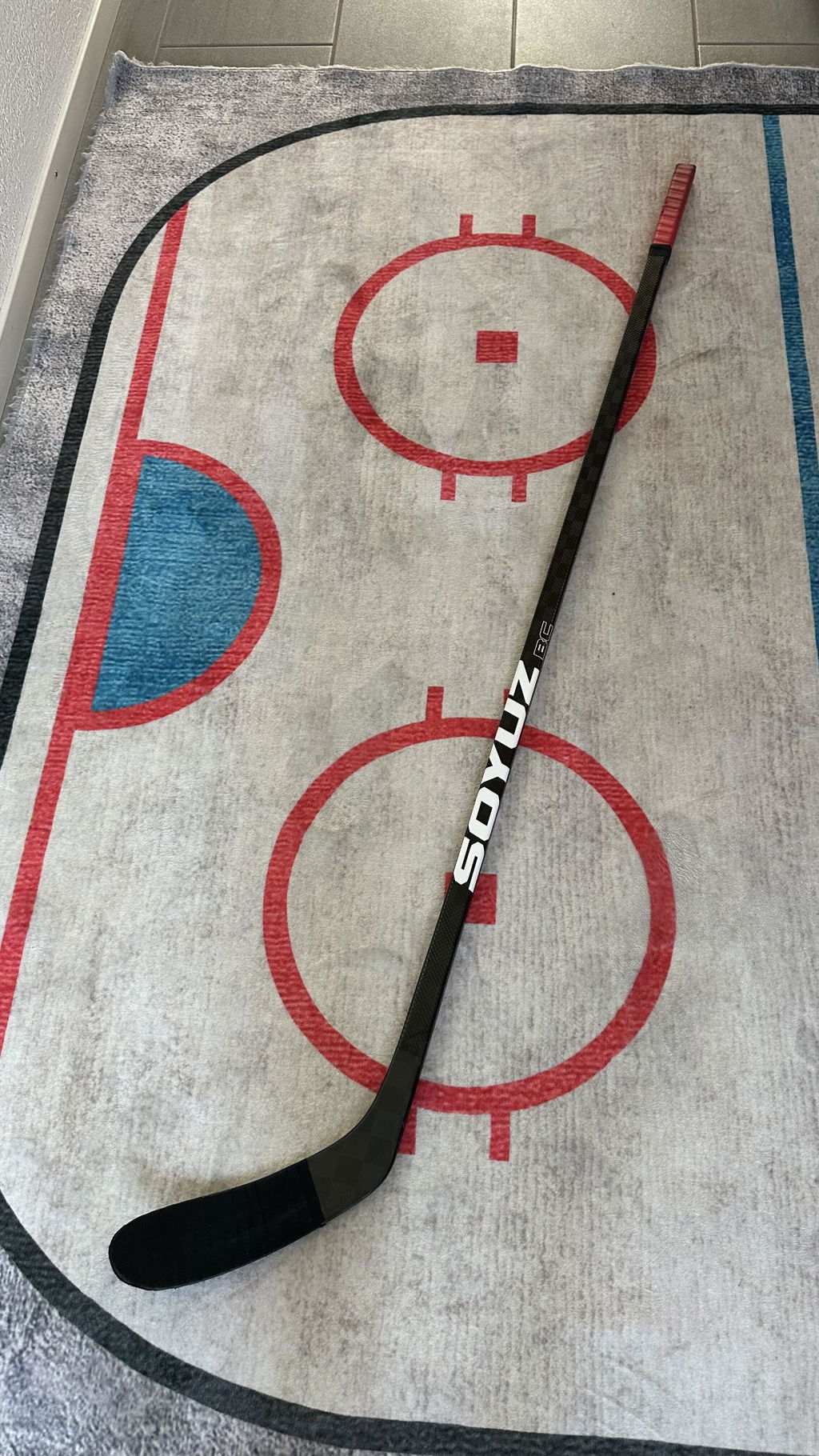
Mobility? Check. Now you just need the right stick: at ABSHockey you'll find SOYUZ sticks in stock, shipped in 1–3 business days – and in the 3D Curve Lab the curve that fits your game.


 SOYUZ HIT GRIT
 SOYUZ AURORA
 SOYUZ ARCANE