Cutting or extending your hockey stick – how to do it right
Cutting or extending your hockey stick – how to do it right
Almost every stick gets adjusted at some point. Either it is too long straight from the factory, or your kid has grown and it has become too short. Both can be solved – but both change something most people overlook: your flex.
Here you will learn how to cut cleanly, when an extension is the smarter choice, and how to factor in the change in flex.
First things first: length changes the flex
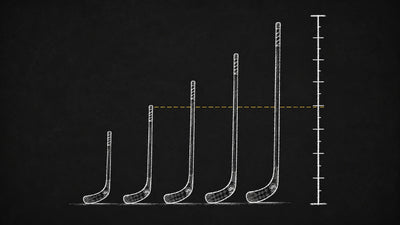
The flex number printed on the shaft only applies at full length. As soon as you change something, the feel on the ice shifts:
| Change | Effect on the flex | Rule of thumb |
|---|---|---|
| Cutting | Stick becomes stiffer | +3 to 5 points per 2.5 cm |
| Extending | Stick becomes softer | −3 to 5 points per 2.5 cm |
An example: you cut 5 cm off a 75 flex. That means you effectively play around 85 flex – two steps stiffer than what you chose. If you are wondering why your new stick feels “dead”, this is usually the explanation.
👉 More on this: Which flex suits you?
Cutting a stick: step by step
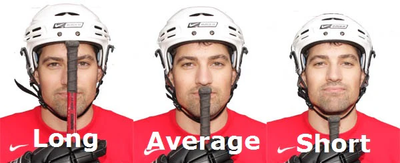
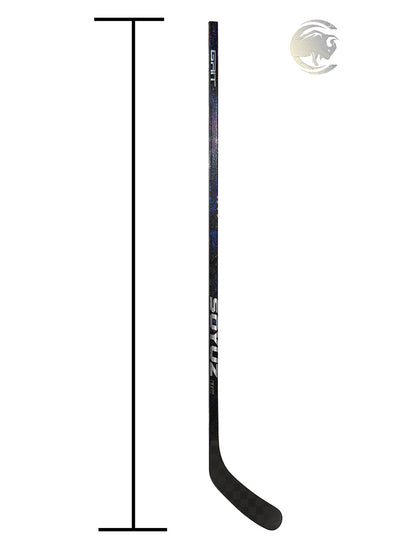
- Determine the length. Stand up straight without skates, the toe of the blade on the floor. The top end should sit between your chin and your nose. On skates, roughly up to your chin.
- Mark it and check. Mark the spot with tape all the way around. It works as a cutting guide and stops the fibres from fraying.
- Rather too little than too much. On the first pass, cut off one centimetre less than planned. You can always cut again, but you cannot glue it back on.
- Saw, do not snap. Use a fine-toothed saw, ideally a hacksaw or a Japanese saw. The shaft should be clamped, and you saw with even pressure all the way around instead of forcing your way through one side.
- Deburr the edge. Smooth it briefly with fine sandpaper – carbon edges are sharp and splinter.
- Rebuild the butt end. Re-tape the end so your hand has grip and no carbon fibres are left exposed.
Safety note: Carbon dust irritates the skin and the airways. Saw outdoors or in a well-ventilated room and ideally wear a simple mask.
Extending a stick: when it is worth it
A stick extension is a piece of carbon or wood that is pushed into the top of the shaft and glued in place. It is the right solution in three cases:
- Your child has grown, but the stick is otherwise still fine. Considerably cheaper than a new one.
- You cut it too short. It happens – and it can be repaired.
- You want a softer flex without buying a new stick.

Our carbon extension comes in four versions:
| Version | Extension | Added weight | Price |
|---|---|---|---|
| Junior 10 cm | 10 cm | 25 g | CHF 17.– |
| Senior 10 cm | 10 cm | 35 g | CHF 19.– |
| Junior 15 cm | 15 cm | 35 g | CHF 21.– |
| Senior 15 cm | 15 cm | 45 g | CHF 23.– |
Important: make sure the extension matches the category. A senior shaft is thicker than a junior shaft – a JR extension will not sit tight in an SR shaft.
How to fit an extension
- Clean the inside of the shaft of tape and glue residue so the extension goes all the way in.
- Insert the extension dry and mark the length you want – before gluing, not after.
- Apply hot glue or two-component adhesive, push it in quickly and line it up.
- Let it cure, then re-tape the butt end.
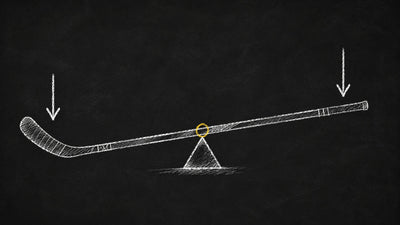
One side effect you should know about: the 25 to 45 grams of the extension sit right at the top, behind your hands. That pulls the balance point back towards you – the stick feels less blade-heavy, even though it gets heavier overall. More on this in the guide to balance and swing weight.
Common mistakes
❌ Cutting off too much in one go – the most common and most annoying mistake
❌ Not factoring in the change in flex and then being surprised by how stiff the stick is
❌ Leaving a kid’s stick long “to grow into” instead of cutting it properly and extending it later
❌ Working with a coarse saw – that tears the carbon fibres open
❌ Leaving the cut edge exposed
✅ Measure first, then mark, then cut one centimetre less
✅ When cutting, plan for one softer flex level
✅ Choose the extension that matches the category
The easiest way: do not cut at all
With a custom stick you specify the length directly when you order. It arrives finished in the length you want – and that way the flex number is genuinely correct, instead of drifting two steps because of the cut.
That is why we ask for the finish length in millimetres when you order. It seems fussy, but it saves you exactly this problem.
👉 Configure a stick in your length
Further guides
This article is part of our big ice hockey stick guide. Also worth reading: the right flex, the right length and the parents’ guide to kids’ sticks.
 Carbon Stick Extension
 ABSHockey Pro Hockey Tape
 SOYUZ STD PRO SR