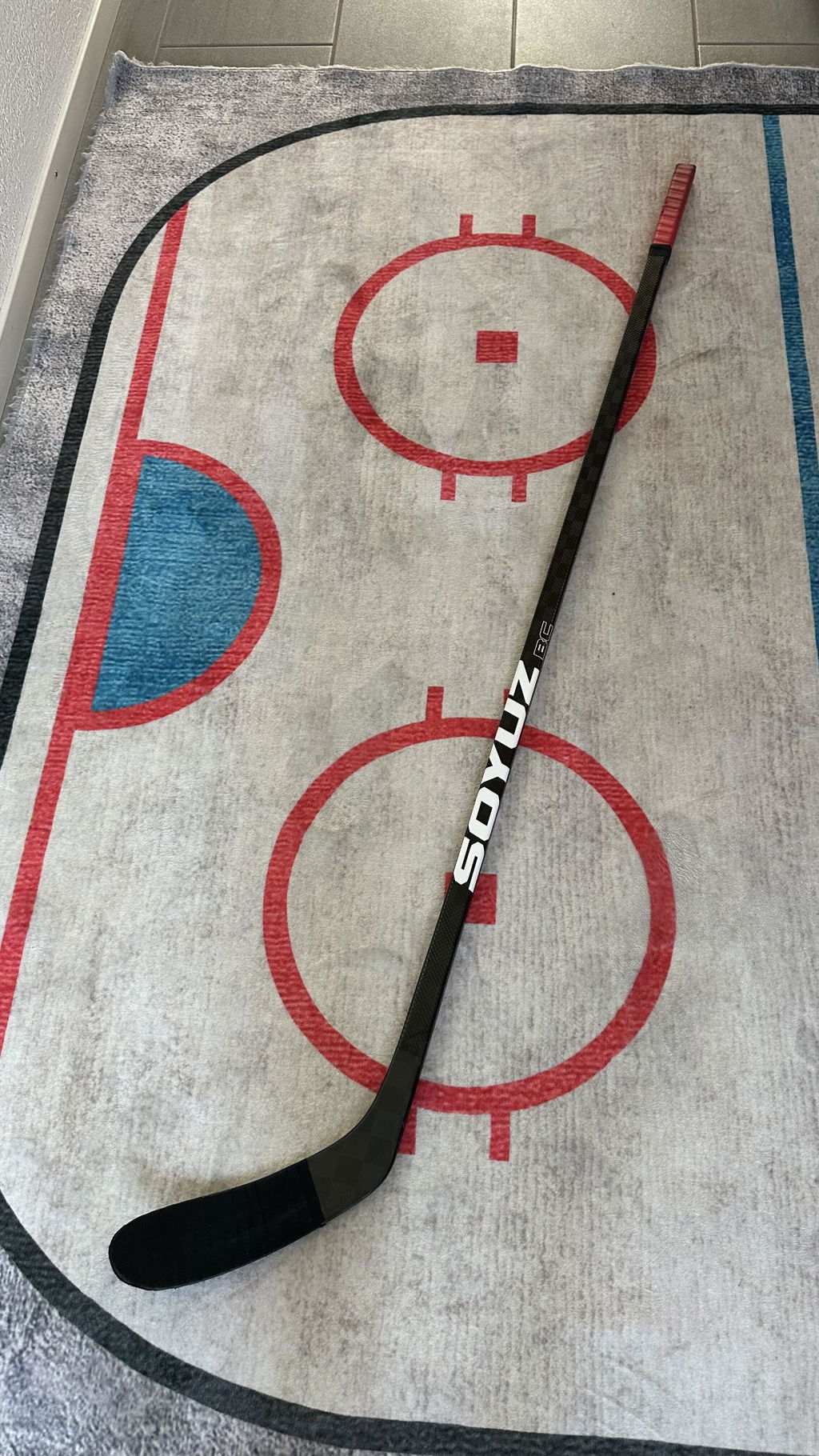
The History of Ice Hockey: 150 Years From Montreal to Carbon
The History of Ice Hockey in Brief
Ice hockey emerged in 19th-century Canada, when European immigrants brought their stick-and-ball games onto frozen lakes. March 3, 1875 is considered the birth of modern ice hockey: on that day, the first organized indoor game took place at the Victoria Skating Rink in Montreal – with nine players per team and a flat wooden disc instead of a ball. Two years later the first seven rules appeared, in 1892 Lord Stanley donated the Stanley Cup, in 1908 Europe organized itself (with Switzerland as a founding member), and in 1917 the NHL was founded.
What came after is a story about materials: from the carved ash stick through fiberglass and aluminum to the one-piece carbon stick – which, incidentally, originated in Switzerland. This article takes you through 150 years in chronological order.
Contents
- Where does ice hockey really come from?
- March 3, 1875: The first organized game
- 1877: The first seven rules
- 1892: Lord Stanley donates a trophy
- 1908: Europe organizes itself – and Switzerland is there
- 1917: The founding of the NHL
- Timeline: 150 years of ice hockey at a glance
- The material history: From the wooden stick to the one-piece carbon stick
- The curved blade: An accident that changed the game
- Mask and helmet: How ice hockey got safer
- The history of women's ice hockey
- Swiss ice hockey history
- Where ice hockey stands today
- Frequently asked questions
Where does ice hockey really come from?
The honest answer is: there is no single inventor and no single birthplace. Ice hockey grew together from several roots.
Long before the first puck dropped in Canada, Europe had games in which a ball was driven with a curved stick: Irish hurling and Scottish shinty – both field games that only moved onto the ice in North America. Games played on ice already existed in Europe, though: Dutch kolven, documented in 17th-century paintings, and English bandy, played with a ball on large ice surfaces and still alive today in Scandinavia and Russia.
British soldiers and immigrants brought these games to North America, where they met long, hard winters and endless sheets of ice. In Canada, several cities still argue over the title of birthplace – above all Windsor (Nova Scotia), Kingston (Ontario) and Montreal. None of these legends can be fully proven.
Something else is undisputed: Montreal is the place where a pastime became an organized sport with rules, teams and spectators. In 2002, the IIHF officially recognized the Victoria Skating Rink as the birthplace of organized ice hockey.

March 3, 1875: The first organized game
On March 3, 1875, two nine-man teams met at the Victoria Skating Rink in Montreal for the first documented, organized ice hockey game in history. It was organized by James Creighton, an engineer from Nova Scotia who worked on the Lachine Canal and served as a figure skating judge at the Victoria Skating Club.
Three details from that game explain a surprising amount about ice hockey today:
- The rink. The game was played indoors, on an enclosed ice surface. That forced clear dimensions, boards and a fixed number of players – the basis for every rule that followed.
- The first puck. Instead of a ball, a flat, round wooden disc was used. The reason was thoroughly pragmatic: a ball bounces and flies into the crowd. A flat disc stays on the ice.
- Nine against nine. By 1880 this was reduced to seven players; the seventh man, the so-called rover, only disappeared in the 1910s and 1920s.
It is also on record that a brawl followed: members of the Victoria Skating Club and spectators objected to the new game taking up ice time and damaging the ice surface. Ice hockey was a game with friction from day one.

1877: The first seven rules
On February 27, 1877, the Montreal Gazette published the first written ice hockey rules – known as the Montreal Rules or McGill Rules, because students at McGill University shaped them decisively. There were just seven rules, and six of them were taken from English field hockey.
The most important innovation: the ball could not be passed forward. Whoever carried it had to keep it on his own stick; teammates ahead of him were considered offside. For decades, ice hockey was therefore a dribbling game, closer to rugby than to today's passing game.
That it became the fastest team sport in the world comes down to a single rule change – more on that shortly.
1892: Lord Stanley donates a trophy
Frederick Arthur Stanley, Governor General of Canada, saw his first ice hockey game in 1888/89 and was immediately hooked. On March 18, 1892, he announced that he would donate a trophy for the best team in Canada. He bought a silver bowl for around ten guineas – roughly 48 Canadian dollars.
The Dominion Hockey Challenge Cup was first awarded in 1893 to the Montreal Hockey Club – without a final series, simply as champion of the Amateur Hockey Association of Canada of the time (founded on December 8, 1886).
Worth noting: Lord Stanley never saw a game played for his own trophy. He was recalled to England before the first Cup was awarded. Today the Stanley Cup is the oldest trophy still being awarded in North American professional sport – and the only one with the winners' names engraved on it. Who makes it onto the band is regulated, though: at least 41 regular season games or an appearance in the final.
How the road to the Cup works today is something we explain in detail in our article NHL playoffs explained simply.
1908: Europe organizes itself – and Switzerland is there from the start
While professional hockey was taking shape in Canada, Europe built a structure of its own. On May 15/16, 1908, the Ligue Internationale de Hockey sur Glace (LIHG) – today's IIHF – was founded in Paris.
Around the table in Paris sat the delegates from Belgium, France, Great Britain and Switzerland; Bohemia joined the same year and also counts among the five founding members. Switzerland was therefore not a latecomer but a co-architect of international ice hockey – a detail that is surprisingly little known in Switzerland itself.
Only four months later, on September 27, 1908, the Swiss Ice Hockey Association was founded. A predecessor organization, the Ligue de hockey sur glace de la Suisse romande, had existed since 1904. The first official Swiss championship took place in 1909, won by HC Bellerive Vevey.
The driving force was not purely sporting: the winter resorts in Graubünden and the Bernese Oberland lived off British tourism. British guests brought the game with them, and the hotels built ice rinks. In Davos, the Internationale Schlittschuh-Club was formed in 1893, followed a year later by the St. Moritz Bandy Club – from 1895 the two met annually for a duel.
1917: The founding of the NHL
On November 26, 1917, representatives of several clubs met at the Windsor Hotel in Montreal and founded the National Hockey League. The occasion was less romantic than the story suggests: the owners simply wanted to get rid of an unwanted rival – Eddie Livingstone, owner of the Toronto Blueshirts. Instead of expelling him, they dissolved the old league and founded a new one without him.
The first season was contested by four teams: Montreal Canadiens, Montreal Wanderers, Ottawa Senators and the Toronto Hockey Club, later known as the Arenas. The first game took place on December 19, 1917 – and by January 1918 the Montreal arena burned down, after which the Wanderers disappeared from the league following just six games.
The decisive change on the ice came a good decade later: from the 1929/30 season the forward pass was allowed in all three zones. A dribbling game became a passing game – and ice hockey became the fast sport we know today. The effect was immediately measurable: in the 1928/29 season, 2.92 goals were scored per game; a year later it was 5.91. A doubling caused by a single rule change.
If you want a deeper overview of how the league developed from there, this video walks through the entire history of the NHL.
Timeline: 150 years of ice hockey at a glance
The first organized game
Victoria Skating Rink, Montreal. Nine against nine, played with a flat wooden disc.
The first seven rules
Published in the Montreal Gazette. Forward passes are banned.
Lord Stanley donates the Stanley Cup
First awarded in 1893 to the Montreal Hockey Club.
Founding of the LIHG (today IIHF) in Paris
Switzerland is one of the five founding nations. The Swiss Ice Hockey Association follows in September.
The NHL is founded
Four teams contest the first season.
Olympic debut in Antwerp
At the Summer Games, of all places. From 1924 (Chamonix) ice hockey belongs to the Winter Games.
The first Spengler Cup in Davos
Donated by Dr. Carl Spengler. Still the oldest invitational tournament in the world.
The forward pass is allowed
Probably the most consequential rule change in sports history: dribbling becomes passing.
Frank Zamboni builds the first ice resurfacing machine
Before that, the ice was scraped and watered by hand – a process taking over an hour.
Jacques Plante makes the goalie mask stick
On November 1, 1959, after taking a puck to the face, he returns to the ice only with a mask.
The curved blade catches on
Stan Mikita and Bobby Hull turn a broken stick into a revolution.
The NHL doubles from 6 to 12 teams
The end of the "Original Six" era.
The Summit Series
Canada against the USSR. Paul Henderson scores 34 seconds before the end to make it 6:5 in the eighth game.
Helmets become mandatory in the NHL
Applies to every player who enters the league after June 1, 1979.
The "Miracle on Ice"
US college players beat the Soviet Union 4:3 – not in the final, though, but in the medal round.
First official Women's World Championship
In Ottawa, gold for Canada.
The first one-piece carbon stick – from Switzerland
Developed by Composite Busch SA. The commercial breakthrough follows in 2001 with the Easton Synergy.
Nagano: NHL professionals and women at the Olympics
Gold for the Czech Republic in the men's tournament, for the USA in the women's.
Salary cap after the lockout
An entire season is cancelled. The salary ceiling starts at 39 million dollars.
The NHL returns to the Olympics
For the first time since 2014. In Milano-Cortina the USA beat Canada 2:1 in overtime. The Swiss women take bronze.

The material history: From the wooden stick to the one-piece carbon stick
Telling the history of ice hockey through its materials makes it especially tangible. For over a hundred years almost nothing happened – and then almost everything happened in thirty.
| Period | Technology | What it changed |
|---|---|---|
| until approx. 1920 | One-piece stick from a single piece of hardwood (ash, hickory) | Heavy, inelastic, broke often. Every stick was one of a kind. |
| 1920s–1940s | Laminated wood (glued layers) | Considerably more break-resistant and lighter. Sticks became reproducible for the first time. |
| 1950s–1960s | Fiberglass wrapping on the blade | The blade lasted longer and held its shape – the prerequisite for curved blades. |
| 1980s | Aluminum shaft with replaceable blade | Consistent flex over the entire lifespan. Approved in the NHL from 1981. |
| since 1992 / 2001 | One-piece carbon stick | About a third lighter, defined kick point, consistent behavior right up to the break. |
The aluminum shaft solved a problem in the 1980s that every wood player knew: a wooden stick gets softer with every practice. Early adopters were Brad Park and Dave Christian; the most famous ambassador became Wayne Gretzky, who signed with Easton in 1990 and in 1994 scored the 802nd goal that broke Gordie Howe's record with an aluminum shaft. He was not a pioneer, though – just the best advertisement.
The one-piece carbon stick has a backstory that begins in Switzerland: as early as 1992, Composite Busch SA built the first one-piece carbon stick. The commercial breakthrough came nine years later with the Easton Synergy (2001), which Scott Gomez was the first NHL player to use. Within a few years, wood disappeared almost completely from professional hockey.
What goes into a modern stick today – layup, taper geometry, kick point – is something we break down in our article Kick points explained and on our page about SOYUZ technology.

The curved blade: An accident that changed the game
Until the early 1960s, every blade in ice hockey was straight. That this changed goes back to a broken stick.
The best-known version of the story goes like this: Stan Mikita of the Chicago Black Hawks broke the blade of his stick in practice, kept shooting for fun – and noticed that the puck suddenly came off the bent blade differently: harder, with more spin, harder for the goalie to read. This origin story is not entirely undisputed; Cy Denneny, Bert Olmstead and Andy Bathgate had already experimented with curved blades years earlier. What is undisputed is who made the curve popular: Mikita and his teammate Bobby Hull soaked blades in hot water and wedged them under door frames overnight.
The result was the legendary "banana blades" with sometimes extreme curves – so extreme that goalies complained about uncontrollably fluttering shots and the NHL had to step in:
| Season | Maximum permitted curve |
|---|---|
| until 1966/67 | unlimited |
| 1967/68 | 1.5 inches (38 mm) |
| 1969/70 | 1 inch (25 mm) |
| 1970/71 | 0.5 inches (13 mm) |
| since 2006 | 3/4 inch (19 mm) |
The entire curve system we use today grew out of those experiments – from the balanced P88 through the versatile P92/P29 to the aggressive P28. If you want to know which one suits your game, our Curve Guide will help.
Mask and helmet: How ice hockey got safer
Protective equipment caught on surprisingly late in ice hockey – and against considerable resistance.
On November 1, 1959, a shot from Andy Bathgate hit Montreal Canadiens goaltender Jacques Plante in the face. Plante was stitched up and declared that he would only return to the ice with his self-built fiberglass mask. His coach Toe Blake was against it – masks were seen as a sign of cowardice. Since there was no backup goaltender, Blake gave in. Plante stayed unbeaten, kept the mask and ended an era with it. The last NHL goalie without a mask, Andy Brown, played until 1974.
It went similarly with the helmet: only in 1979 did it become mandatory for all players entering the NHL. Anyone already in the league could keep playing without one by signing a waiver – Craig MacTavish did so until 1997.
This delay also explains why equipment today is so elaborate – and expensive. We broke down the reasons in 6 reasons: Why is ice hockey equipment so expensive?.

The history of women's ice hockey
Women have played ice hockey almost as long as men: games are documented in Canada as early as the 1890s, and Lord Stanley's daughter Isobel was among the first known players.
Recognition took a century, though. The first official IIHF Women's World Championship was held in Ottawa in 1990 – remarkably, the only major women's tournament in which body checking was allowed. Canada won gold.
The Olympic debut followed in 1998 in Nagano, where the USA beat Canada 3:1 in the final. These two nations have dominated the sport ever since – in 2026 in Milano-Cortina they faced each other in the final again, with the USA winning 2:1 in overtime.
For Switzerland, the women's tournament has become the more successful project: bronze in 2014 in Sochi and bronze again in 2026 in Milano-Cortina.
Swiss ice hockey history
Switzerland was on the international stage earlier than many people think – and has been back among the world's best for over a decade.
| Year | Milestone |
|---|---|
| 1904 | Founding of the Ligue de hockey sur glace de la Suisse romande |
| 1908 | Switzerland is a founding member of the LIHG (today IIHF); the national association follows in September |
| 1909 | First Swiss championship, won by HC Bellerive Vevey |
| 1923 | First Spengler Cup in Davos |
| 1928 & 1948 | Olympic bronze for the men – both times in St. Moritz |
| 1930–1953 | The first strong era: World Championship silver in 1935, plus bronze six times (1930, 1937, 1939, 1950, 1951, 1953) |
| 2013, 2018, 2024, 2025 | Four World Championship silver medals for the men within twelve years |
| 2014 & 2026 | Olympic bronze for the women |
| 2026 | World Championship silver on home ice after a 0:1 overtime loss to Finland in the final |
The gap in between stands out: between 1953 and 2013, Switzerland went sixty years without a World Championship medal. The return to the world's elite is therefore a very recent phenomenon – and it coincides with the build-up of a professional youth structure and the establishment of the National League as one of the strongest leagues in Europe.
Where ice hockey stands today
2026 was a turning point for the sport. After a twelve-year break, NHL professionals returned to the Olympic Games. In the final in Milano-Cortina, the USA beat Canada 2:1 in overtime – Jack Hughes scored 1:41 into overtime, Connor Hellebuyck stopped 41 shots. For the USA it was the first Olympic men's gold since the "Miracle on Ice" of 1980. Bronze went to Finland.
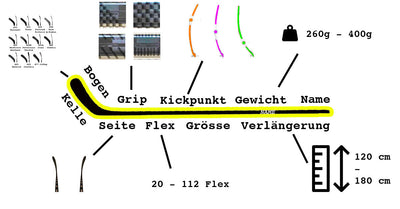
At the same time, equipment has developed in a direction that would have been unthinkable thirty years ago: a current top carbon model weighs under 400 grams and can be matched to an individual player down to the detail in flex, kick point, curve and length.
What was once reserved for professionals is available to every player today. If you want to tune your stick precisely to your game, you can configure it yourself with us – or let the Stick Finder guide you through the options.
Frequently asked questions about the history of ice hockey
When was ice hockey invented?
There is no single moment of invention. March 3, 1875 is considered the birth of organized ice hockey, when the first documented indoor game with fixed teams took place at the Victoria Skating Rink in Montreal. The predecessors – hurling, shinty, kolven and bandy – are centuries older.
Who invented ice hockey?
The first game was organized by James Creighton, an engineer from Nova Scotia. That makes him a trailblazer, not an inventor – the game itself grew out of several European stick-and-ball games.
Why is the game played with a puck instead of a ball?
For practical reasons. A flat wooden disc was used in the first indoor game in 1875 because a ball bounces too high and flies into the crowd. A flat disc stays on the ice. The rubber puck became standard in the years that followed.
How old is the Stanley Cup?
Lord Stanley donated it on March 18, 1892, and it was first awarded in 1893 to the Montreal Hockey Club. That makes it the oldest trophy still being awarded in North American professional sport.
When was the NHL founded?
On November 26, 1917, at the Windsor Hotel in Montreal. The first season was contested by four teams: Montreal Canadiens, Montreal Wanderers, Ottawa Senators and Toronto Arenas.
How long has ice hockey existed in Switzerland?
Since the end of the 19th century, brought by British winter sports tourists. The western Swiss league was formed in 1904, and the national association was founded in 1908 – the same year Switzerland became a founding member of the international federation LIHG (today IIHF). The first Swiss championship was won in 1909 by HC Bellerive Vevey.
When did the curved blade appear?
In the early 1960s, made popular by Stan Mikita and Bobby Hull at the Chicago Black Hawks. Individual players had experimented with curved blades earlier, but only those two turned it into a standard. Because the early "banana blades" became too extreme, the NHL limited the curve from 1967/68 onwards – today a maximum of 3/4 inch (19 millimeters) is allowed.
How long have carbon sticks been around?
The first one-piece carbon stick was built in 1992 by the Swiss company Composite Busch SA. The commercial breakthrough came in 2001 with the Easton Synergy. Within a few years, carbon had pushed wood almost completely out of professional hockey.
When did the first goaltender wear a mask?
Clint Benedict briefly tried a mask in 1930. Jacques Plante made it permanent from November 1, 1959. The last NHL goalie without a mask was Andy Brown in 1974.
Why was the "Miracle on Ice" so significant?
On February 22, 1980, a US team of college players beat the Soviet Union, considered unbeatable, 4:3. Contrary to how it is often portrayed, that was not the final – gold was only secured by the 4:2 win against Finland two days later. The political symbolism in the middle of the Cold War turned the game into a cultural event.
Conclusion
In 150 years, a pastime on frozen ponds became the fastest team sport in the world. What has changed most is not the principle of the game – it is the equipment. A player from 1875 would understand today's rules within an hour. He would not recognize a modern carbon stick.
That is exactly where we come in: we build sticks that make today's technical standard accessible – without the price of the big brands. You can find more about this in our hockey stick buyer's guide or directly among our Custom Sticks.



 SOYUZ HIT GRIT
 SOYUZ AURORA
 SOYUZ ARCANE