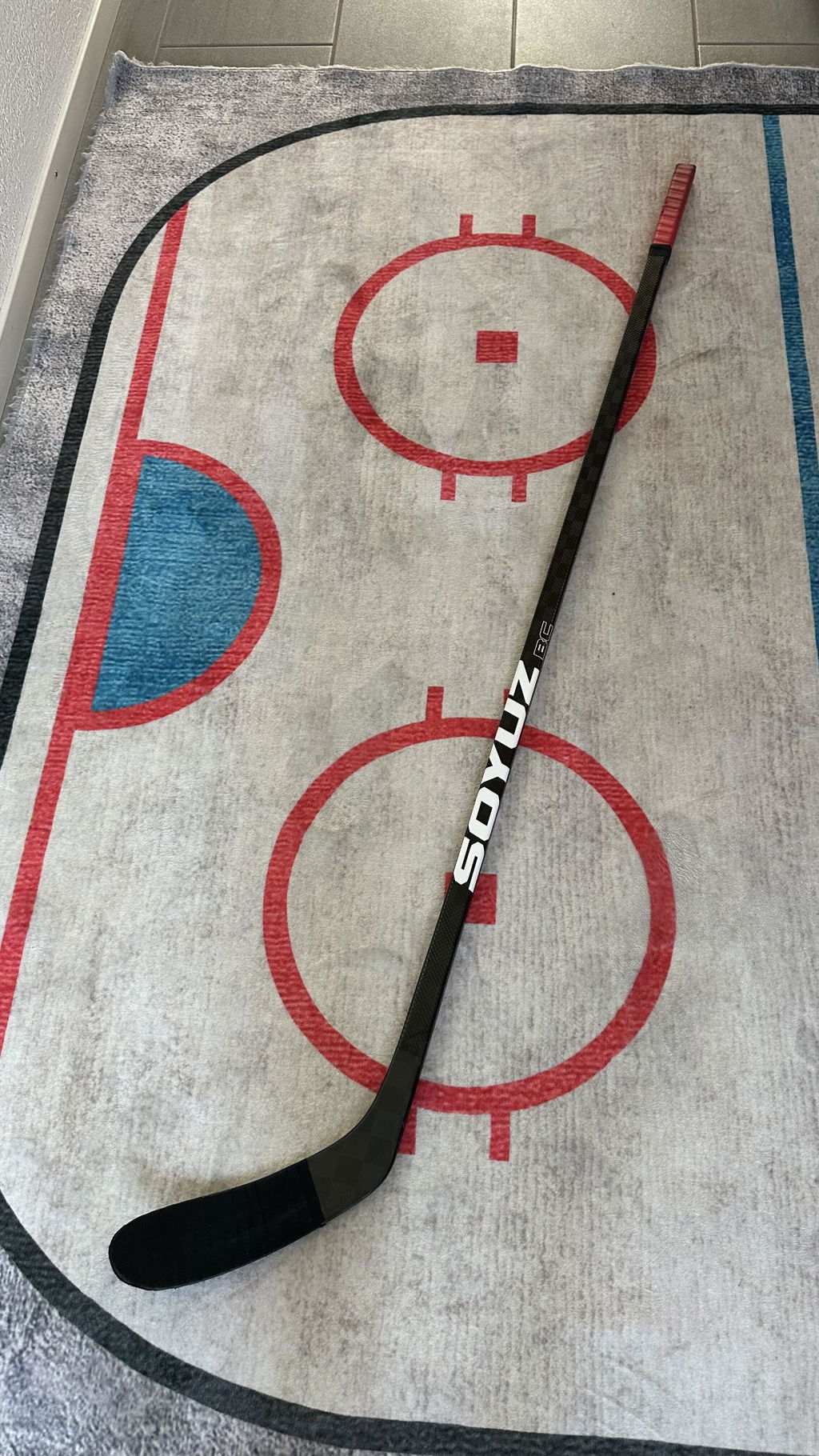
PM9 Curve (ABSHockey AM9) – The classic control blade with a strong backhand
PM9 Curve – The classic control blade with a strong backhand
The PM9 is one of the most classic blade patterns in hockey. While many players today prefer more open patterns like P92 or P28, the PM9 still appeals to players who mainly want control, clean passing, and a strong backhand.
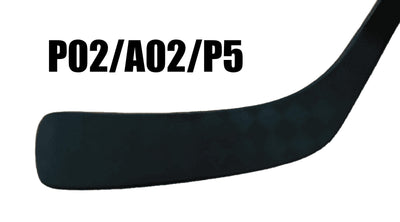
At ABSHockey, we offer this blade family as PM9 in our custom sticks. Depending on the brand, you will find very similar versions under different names, such as Bauer PM9, CCM P14/P15, Warrior W01, or True MC2.

What really makes the PM9 stand out on the ice
The PM9 is not a blade that gives you a lot for free. It does not automatically help you lift the puck quickly, and it is not the first choice for extreme toe drags or ultra-aggressive quick releases.
Its strengths are somewhere else:
- very clean backhand play
- controlled, flat passes
- direct puck feel
- precise, lower shot trajectory
That is exactly why it suits players who play with intention and prefer a controlled style over an overly aggressive offensive one.
Technical profile of the PM9
- Curve: slight mid-heel curve
- Face: more closed
- Toe: round
- Blade character: classic, direct, predictable

In practice, this means:
- The puck stays controlled on the blade when passing and receiving.
- Backhand passes and backhand chips feel more natural than with more open toe-focused curves.
- Wrist shots and snapshots often come off very clean and relatively flat.
- For quick high shots, you need more technique of your own than with a P92 or P28.
The biggest strengths of the PM9
1. Backhand
The PM9 is especially strong if you do a lot on your backhand: quick passes, protecting the puck along the boards, short chips, or backhand finishes in tight spaces. This is exactly where the more closed, classic shape shows its advantage.
2. Passing
If you like to make flat, hard, direct passes, the PM9 is very comfortable to use. The puck tends to stay down better and does not pop up as easily as it can with more open patterns.
3. Control instead of flash
The PM9 often feels calmer than more modern curves. Many players like exactly that: fewer surprises and more predictability.
4. Clean, flatter shots
If you prefer accuracy over simply trying to lift the puck as easily as possible, the PM9 often gives you a very consistent release.
The biggest weaknesses of the PM9
- Less easy lift than a P92 or P28
- Less suited for toe-drag-heavy styles of play
- Less support on quick high-glove releases
- Less forgiving of technical mistakes than open patterns
In short: the PM9 rewards clean technique, but it hides fewer mistakes.
Who is the PM9 ideal for?
Centers
Centers often benefit a lot from the PM9 because they pass under pressure, handle pucks on the backhand, and need stable control in tight spaces.
Playmakers
If your game is based more on vision, passing, and control than on pure highlight-reel finishes, the PM9 is a very good fit.
Defensemen
The PM9 is also interesting for defensemen: controlled outlet passes, strong backhand play along the boards, and accurate, flatter shots from the blue line.
Technically sound players
If you do not want the blade to do too much for you and instead want a direct, classic feel, this is where the PM9 stands out.
Who is the PM9 less ideal for?
- Players who want easy lift on their shots
- Players who rely on lots of toe drags and aggressive toe releases
- Pure snipers who want as much help from the blade as possible
- Players who depend on a very open blade face
If your main goal is to get the puck up quickly into the corners, P92 or P28 will usually be easier. For a broader overview of the differences, take a look at our guide to choosing the right blade pattern.
PM9 compared to other well-known blade patterns

PM9 vs. P88
The P88 is more neutral and, for many players, the easier all-round option. The PM9 is even more classic, even more controlled, and usually stronger on the backhand.
PM9 vs. P92
The P92 gives you much more help with lifting the puck and is more offensive. The PM9 is flatter, more controlled, and more predictable.
PM9 vs. P28
The P28 is clearly built for quick toe release and modern scoring styles. The PM9 is almost the opposite: classic, calmer, stronger for passing and backhand play.
Brand equivalents: what is the PM9 called in other brands?
| Brand | Similar pattern | Character |
|---|---|---|
| ABSHockey | PM9 | Classic control blade |
| Bauer | PM9 | Very well-known reference for this family |
| CCM | P14 / P15 | Similar mid-heel / closed-face direction |
| Warrior | W01 | Classic, controlled equivalent |
| True | MC2 | Similar control and backhand-focused family |
Important: Depending on the year, product line, and market, the exact shape can vary slightly. But if you play a PM9 and want something similar in another brand, these names are the most relevant starting points.
Well-known players sometimes associated with PM9 or similar patterns
These kinds of comparisons are often based on retail or pro stock references. They can still help give some context for the pattern family, but they are not always exact one-to-one matches.
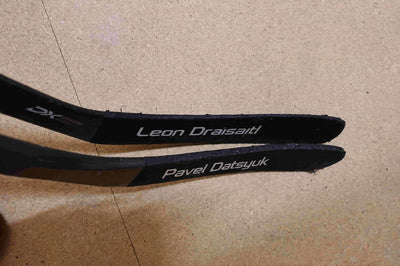
There are also pro stock variants that follow the same idea but are even more specific. One example is a very flat, long PM9-like variant that is sometimes associated with Leon Draisaitl.
Practical buying guide
Choose the PM9 if you want:
- a strong backhand
- controlled, direct passing
- a classic blade feel
- a blade that is not overly open
If you want to play the PM9 yourself, you can find this pattern in our custom sticks.
Choose the P88 instead if you want:
- a neutral all-rounder
- lots of control but a bit more everyday versatility
You can read more about that in our P88 blog article.
Choose the P92 instead if you want:
- easier lift on your shots
- a more offensive setup with more support on release
Choose the P28 instead if you want:
- modern toe releases
- quick, aggressive shots with your hands out in front of your body
If you are still unsure which blade pattern suits your game best, check out our general blade guide or explore our SOYUZ sticks in stock, custom sticks, and the rest of the ABSHockey shop.
Conclusion
The PM9 is not a mainstream blade for everyone, but for the right type of player it is extremely effective.
If you want a blade that gives you backhand control, passing precision, puck control, and a classic feel, the PM9 is still one of the most interesting options out there.
In one sentence:
If the P92 feels too open and the P28 too specialized, and you want something even more controlled than a P88, the PM9 is a very strong choice.
And if you want to try this classic pattern yourself, take a look at our custom sticks with PM9.
Related Curves & Configuration
This article is part of our big Hockey Curve Guide. Also relevant: the P88 / Kane and the P02 / Lidstroem.
Related guides: Leon Draisaitl's stick in detail · P92 / P29 – the most versatile curve · P28 – the toe curve in detail · P90TM – the P28/P92 hybrid
All SOYUZ models in the configurator: ARCANE · RAPID · HIT GRIT · MASTER FRST · CLASSIC SPR · AURORA · STD PRO



 SOYUZ HIT GRIT
 SOYUZ AURORA
 SOYUZ AURORA INT