Leon Draisaitl's Stick: The Flattest Curve in the NHL in Detail
Leon Draisaitl's Stick: The Flattest Curve in the NHL in Detail

Over the past few years half the NHL has moved to ever more aggressive toe curves – P28, PRO9246, anything that releases fast and high. Leon Draisaitl does the exact opposite. And he is one of the best goal scorers in the league. We had his stick in our hands.
Specs
- Brand: Warrior
- Flex: 100
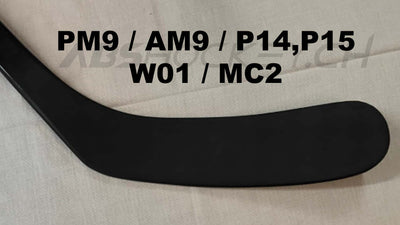
- Curve: Customised PM9 – flat, but noticeably longer than the standard version
- Shoots: Left
- Tape: White on the knob, black on the blade from heel to toe
The flex is the first thing that stands out. 100 is considerably stiffer than what most NHL forwards use today, many of whom sit between 70 and 85. Draisaitl is big and strong enough to load even a shaft that stiff properly – and gets more power out of it than a softer stick would give him.

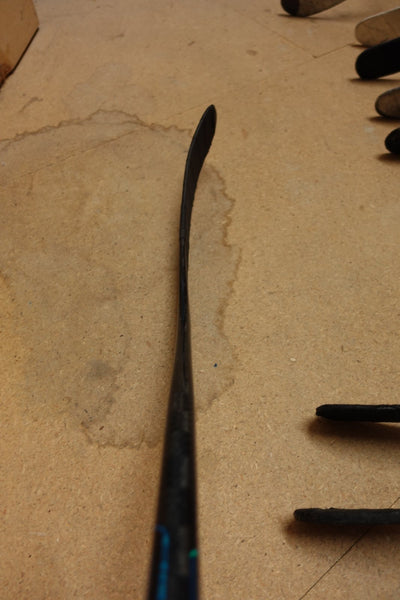
The curve: a PM9 that grew

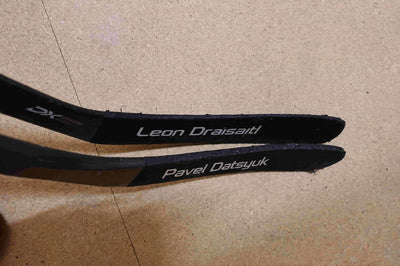
The starting point is the PM9 – the classic straight blade, built for maximum control, clean passing and a strong backhand. Draisaitl's version stays just as flat but is noticeably longer than the standard blade. That is why the scene gave it a nickname: burger flipper. Look at the photo and you immediately see where it comes from.

What looks old-fashioned at first glance is a very deliberate decision. A flat, long blade gives you:
- Maximum contact area on the shot – the puck stays on the blade longer and the direction becomes more predictable
- A backhand that works – the biggest sacrifice with toe curves, a non-issue here
- Control on pass reception, even on hard feeds
- Reach – the extra length helps on interceptions and in board battles
Draisaitl does not score through surprise but through precision and power. His power play one-timer is one of the most dangerous weapons in the league – and for exactly that, a flat, long blade is the better tool than an aggressive toe curve.
Why this runs against the trend
In our article on the Datsyuk curve we called Draisaitl the great exception. Here is the evidence.
The trend of recent years clearly points towards the toe: P28, PRO9246, P90TM – all blades built for a quick release and creative puck handling. Draisaitl proves it works the other way round too. The lesson is not “flat is better”, but: the curve has to match your game, not the trend.
The player
Leon Draisaitl, born in Cologne in 1995, is the most successful German ice hockey player of all time. Drafted third overall by the Edmonton Oilers in 2014, he won both the Hart Trophy as the league's most valuable player and the Art Ross Trophy as top scorer in 2020 – the first German ever to do so. His father Peter Draisaitl was an international as well.
Not sure which curve suits your game? Take our 2-minute stick finder and find your model.


 SOYUZ HIT GRIT
 SOYUZ AURORA
 SOYUZ ARCANE