P86 / PRO9246 in Detail: Who This Curve Is Really For
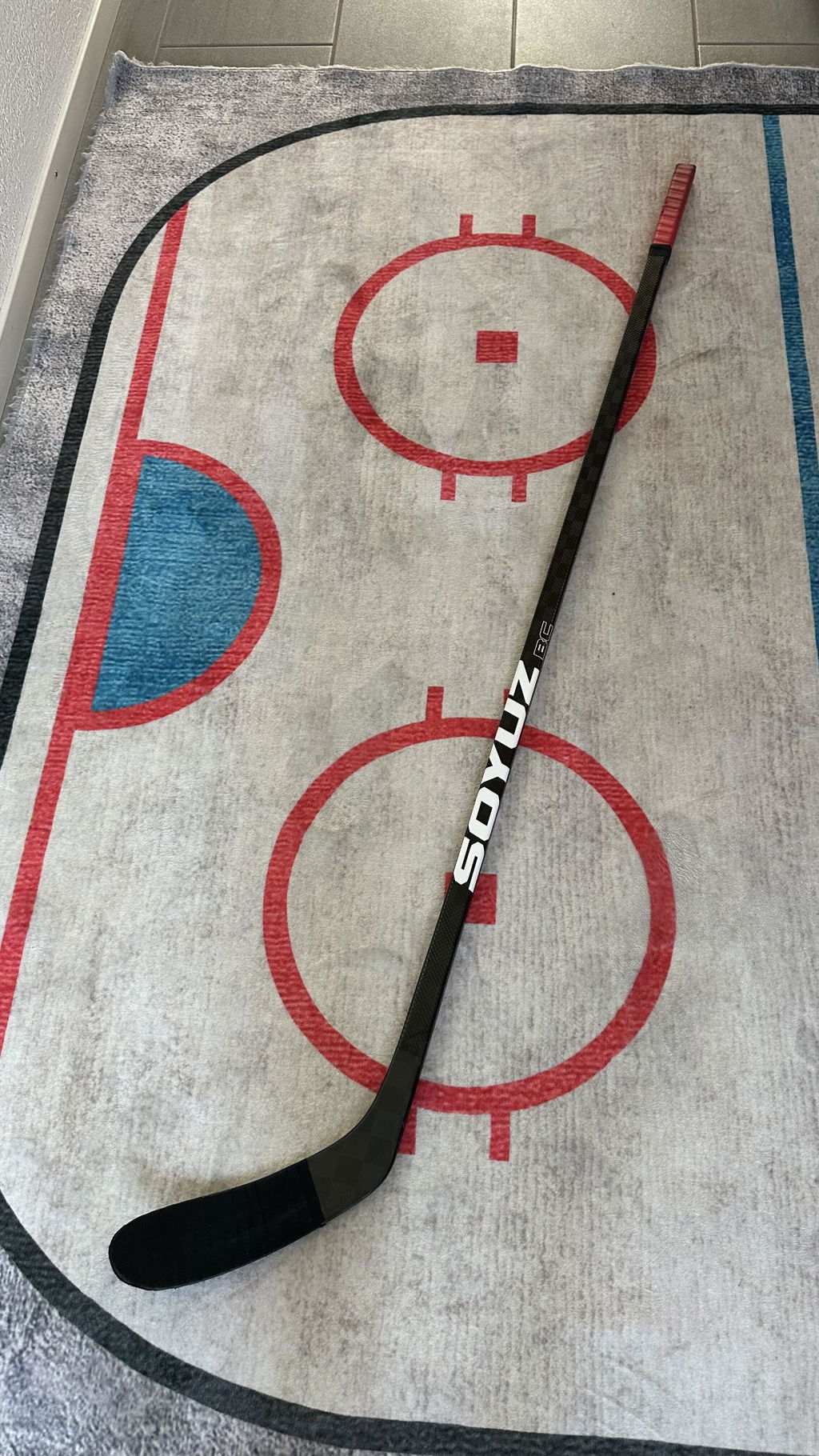
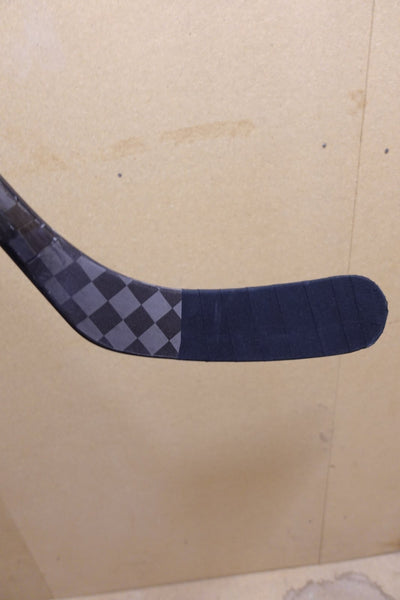
The P86 – listed by CCM as the PRO9246 – is the answer for players who can't decide between a P92 and a P28. In the NHL it's played by Macklin Celebrini and Trevor Zegras, among others. Technically it combines the blade shape of a P92 with a noticeably more pronounced toe hook in the style of a P28. Pro stock descriptions sum it up neatly as a “P28-like curve with a P92 blade shape” or simply a “deep P92”. In this guide we take it apart completely – the technology, the on-ice feel, an honest rating of every discipline, comparisons with P92, P28, P88 and P90TM – plus a self-check that tells you in 30 seconds whether it suits your game.
Looking for a direct comparison? In our big blade guide we compare the P86 head-to-head with P92, P28 and P90TM – with an interactive curve-compare tool. You'll also find P92 vs P28 and every other matchup in one place.
What Exactly Is the P86 / PRO9246?
The P86 isn't a classic mainstream retail curve like the P92, P88 or P28, but a modern hybrid design. At its core it follows the logic of the P92 family: a mid curve drifting slightly forward, an open face, versatile geometry. At the same time it brings noticeably more toe action than a normal P92. That's exactly why it's so often described as a mix of P92 and P28.
| Characteristic | P86 / PRO9246 |
|---|---|
| Curve type | Mid-toe hybrid (“deep P92”) |
| Face | Open |
| Blade shape | P92 blade shape |
| Toe hook | Pronounced, P28-like |
| Lie | 6 |
| Ideal for | Quick release, toe drags, creative finishes |
| NHL reference | Macklin Celebrini, Trevor Zegras |
| Available at ABSHockey | Senior (SR) and Intermediate (INT) |

The Technology Behind the Curve
Five features determine how a curve feels – and on the P86 they're clearly distributed:
1. Where the main curvature sits. The PRO9246 sits closer to a mid-toe solution than to a calm mid curve. The blade doesn't stay neutral; it actively joins in as soon as the puck moves toward the tip. That supports dynamic releases and lifting the puck out of tight situations.
2. How open the face is. A more open blade helps you pull the puck up quickly – one of the P86's biggest advantages. It also raises the technical demand: get your hands in the wrong place and you'll shoot high sooner. How directly the shot releases also depends on the kick point.
3. The blade shape. According to pro stock descriptions, the PRO9246 uses the P92 blade shape. That matters, because blade shape strongly influences forehand, backhand, passing and puck handling. As a result the curve doesn't feel exotic – it stays in familiar geometry.
4. The toe hook. This is what gives it its character. It supports tight puck handling at the tip, creative finishes and quick releases from the wrists.
5. The lie. The PRO9246 is typically listed with lie 6 – a fairly universal value that suits many players with a neutral to slightly upright stick position. If the term is new to you, our lie guide explains it.

A worthwhile video on the origin and classification of the P86 / PRO9246 curve.
How Does the P86 Play on the Ice?
It's more aggressive than a normal P92, but not as uncompromising as a pure toe curve. That's exactly what makes it an interesting middle ground. Here's how we rate the individual disciplines:
Rating by the ABSHockey editorial team based on blade geometry and practical feedback. 5 = outstanding, 1 = weak.
Who Is the P86 Ideal For – and Who Not?
| ✅ The P86 suits you if … | ❌ Probably not if … |
|---|---|
| you like a P92 but want more toe behaviour | you're after maximum neutrality and control (→ P88) |
| you get on with a P28 but prefer a more familiar blade shape | you rely heavily on your backhand |
| you take a lot of wrist and snap shots on the move | you mainly need flat, hard slapshots |
| you enjoy toe drags and creative one-on-one moves | you're still learning the basic technique |
| you think offensively and actively use the curve to score | you prefer simple, straightforward plays |

🏒 Self-Check: What Type of Player Are You?
Open the type that fits you best – and see whether the P86 is your curve:
🤔 “I play a P92, but I'm missing some bite on my shot”
That's exactly what the P86 is built for. Same blade shape, same basic feel – but noticeably more toe action and a quicker release. The most natural switch there is. Configure a SOYUZ with the P86 →
🎯 “I'm a sniper – quick, elevated finishes”
Top choice. The open face plus toe hook get the puck up without a big windup. If you want something even more extreme, take a look at the P28.
🪄 “I'm a dangler – toe drags, tight hands, creative moves”
Very good choice. The active toe area works with you on creative moves instead of just staying neutral.
🎬 “I'm a playmaker – building plays and precise passes”
Borderline. It works well on the forehand, but for pass reception and on the backhand the P92/P29 is more forgiving.
🧊 “I'm a defenceman – hard slapshots and a safe backhand”
Probably not. The neutral P88 is far better suited to that.
🌱 “I'm just starting out”
Not yet. The open face and strong toe hook don't forgive much. Start with a P92/P29 or a P88.
The P86 Compared to P92, P28 and P88
| Feature | P86 / PRO9246 | P92 / P29 | P28 | P88 |
|---|---|---|---|---|
| Curve type | Mid-toe hybrid | Mid | Toe | Mid |
| Face | Open | Open | Open | Neutral |
| Release speed | Very quick | Quick | Extremely quick | Medium |
| Toe drags | Very good | Decent | Outstanding | Decent |
| Backhand | Decent | Decent | Demanding | Very good |
| Difficulty | Medium to high | Medium | High | Low |
| Ideal for | Creative offensive players | All-rounders | Snipers & danglers | Control & beginners |
P86 vs. P92 / P29
The P92/P29 has been the most versatile all-round curve for years: forgiving, suited to almost every type of player. The P86 builds on exactly that but delivers more toe hook and therefore more dynamism on the shot. If you're after a “livelier” blade on a familiar base, you end up with the P86.
P86 vs. P28
The P28 is the classic toe curve: the fastest release, but not intuitive for everyone. The P86 feels like the more accessible alternative – offensive and modern, but with a more familiar overall feel thanks to the P92 blade shape.
P86 vs. P88
The P88 is more neutral, more controlled and easier on the backhand. If you want maximum all-round safety, you're better served there. If you want more danger on the shot and more creativity around the toe, the P86 has more potential.
P86 vs. P90TM
Both are mid-toe hybrids with a similar direction. The P90TM runs in lie 5 (we also offer lie 7), the P86 in lie 6 – and the P86 leans harder on its pronounced toe hook. Players coming from a P92 usually find the P86 more familiar; if you want to sit geometrically right between P92 and P28, the P90TM is your answer.
Advantages of the P86 at a Glance
- Very quick release with minimal windup
- Strong feel on toe drags and tight skill moves
- The puck lifts and places dangerously with ease
- A more familiar base shape than very specialised toe curves
- The natural next step for P92 players
Possible Drawbacks
- Backhand less neutral than on a P88 or more conservative curves
- The open face can send shots high if your technique isn't clean
- Sometimes unnecessarily “active” for very straightforward players
- Not as beginner-friendly as the classic mainstream all-rounders
If you've only ever played very neutral curves, you'll usually need a few sessions before your timing and shot angle settle in.
How to Configure Your SOYUZ With a P86
At ABSHockey you build your stick fully to measure. After the curve you decide on the two other big variables:
👉 Flex: how much stiffness suits your weight and shooting style? Our flex guide explains it.
👉 Length: find the right stick length in the length guide.
👉 Overview: all the specs in one place in the ABSHockey stick guide.
We deliver to Switzerland as well as Germany, Austria, France, Italy, Sweden, Finland, Denmark, the Netherlands, Belgium, Poland, Czechia, Slovakia, Slovenia, Hungary, Croatia, Romania, Bulgaria, Greece, Spain, Portugal, Ireland, Luxembourg, Estonia, Latvia and Lithuania.
Custom sticks: 4–6 weeks · Free shipping to Switzerland and the EU · All shipping information
Ready for your P86?
The P86 is configurable in Senior and Intermediate – flex, length and lettering all up to you. Free shipping, and 5% off from two sticks.
Configure your custom stick → HIT GRIT ARCANEOur Verdict on the P86 / PRO9246
The P86 is a modern hybrid curve for offensive players who want the best of both worlds: the familiar blade shape of a P92 plus the more aggressive, more creative toe character of a P28. Pro stock sources describe it in exactly that space – as a deep P92, or as a P28-like curve on a P92 blade shape, usually with lie 6.
If you want to finish quickly, play creatively and give your stick more character in the offensive zone, it's worth a look. If you're after maximum neutrality, an easy backhand and a classic feel, you're better off with a P88 or a P92.
In short: for technically strong forwards coming from a P92, the P86 is often exactly the sweet spot.
Frequently Asked Questions About the P86 / PRO9246
What is the P86 / PRO9246 curve?
The P86 (CCM designation: PRO9246) is a mid-toe hybrid curve with an open face. It combines the blade shape of a P92 with a noticeably more pronounced toe hook in the style of a P28 and is typically listed with lie 6.
Are the P86 and the PRO9246 the same thing?
Yes. “P86” is the common short name, “PRO9246” the CCM pro stock number for the same blade profile.
Is the P86 more like a P92 or a P28?
It sits in between. The blade shape and the basic feel come from the P92, the stronger toe hook and the more aggressive release from the P28.
Which NHL players use the P86?
The best-known names are Macklin Celebrini (San Jose Sharks) and Trevor Zegras. That said, pros almost always play individually adapted blades that can differ from the retail version. We had Zegras' actual stick in our hands – with photos of the real blade.
What lie does the P86 have?
The P86 / PRO9246 is usually listed with lie 6 – a universal value that suits a neutral to slightly upright stick position.
Is the P86 suitable for beginners?
Only to a limited extent. The more open face and stronger toe hook make it more demanding than more neutral curves, and it suits players with some technique and feel better.
How good is the backhand with a P86?
Solid, but not its greatest strength. More neutral curves like the P88 are easier and more forgiving on the backhand.
What's the difference between the P86 and the P90TM?
Both are mid-toe hybrids. The P90TM runs in lie 5 (we also offer lie 7), the P86 in lie 6 and with a more pronounced toe hook. P92 players usually find the P86 more familiar.
Which sizes does ABSHockey offer the P86 in?
We offer the P86 in Senior (SR) and Intermediate (INT).
Further Curve Guides
- P92 / P29 – the most versatile curve in hockey
- P28 – the toe curve for snipers & danglers
- P90TM – the blend of P28 and P92
- P88 / Kane – the most balanced curve
- P91A / Drury – the heel curve for power
- Max blades (P92M & P28M) in detail
- Trevor Zegras' stick – the P86 on a real pro stock stick
- Which curve is right for me?
External sources: Review of the Zegras PRO9246 / P86 curve · Macklin Celebrini stick spec check · Hockey stick curve guide by Bauer



 SOYUZ HIT GRIT
 SOYUZ AURORA
 SOYUZ AURORA INT