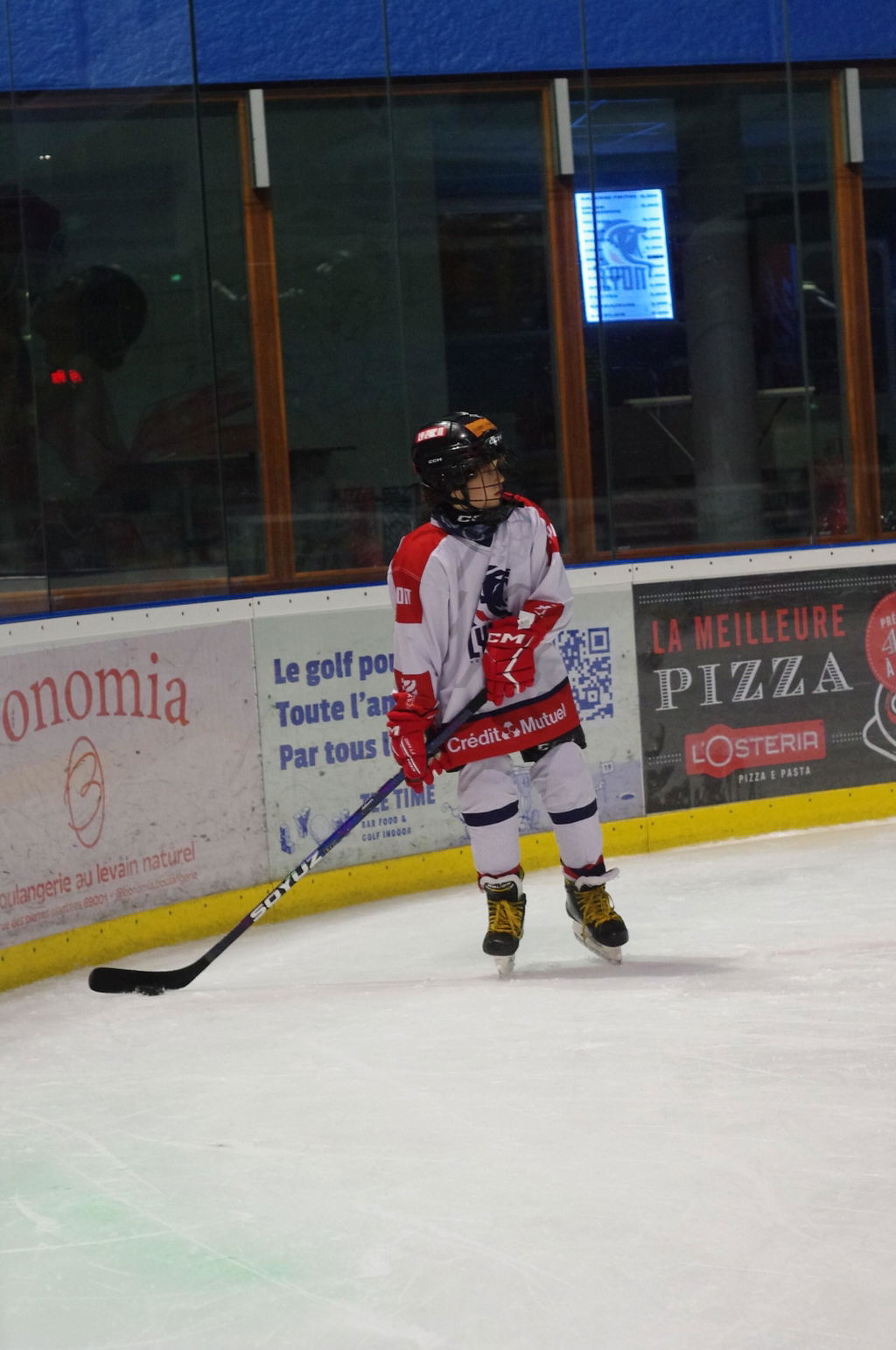
The 5 Most Popular Hockey Stick Curves in 2026: P29, P28, P86, P92 & P90TM – Measured and Ranked by Real Orders
Last updated: 15 November 2026 · by Andri Farrer
Which curves do most hockey players actually use? Most “top 5” lists online are copied from each other, full of player names that stopped being true years ago, and without a single number. We do it differently: our ranking comes from 270 real SOYUZ player sticks ordered at ABSHockey – and every blade is CAD-measured. These are the five curves people really play in 2026.
The short answer: top 5 curves 2026
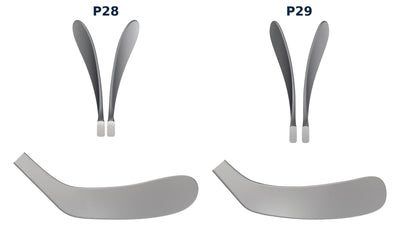
1. P29 – 26% of all orders. The all-round mid curve (= Bauer P92 / CCM P29).
2. P28 – 24%. The toe curve for snipers and danglers.
3. P86 – 11%. Flatter and more closed – control over show.
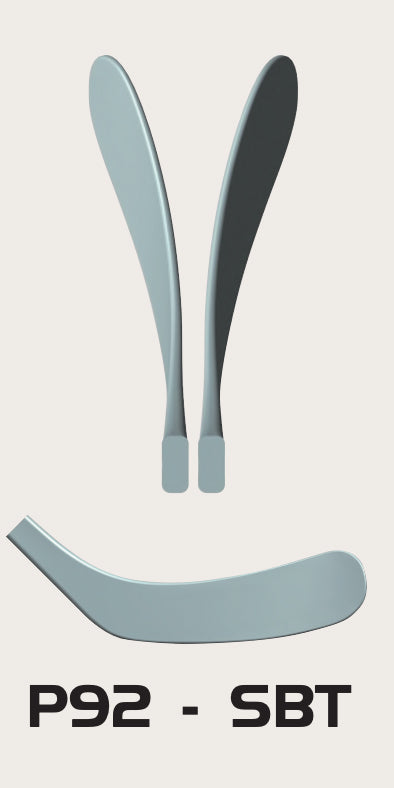
4. P92 – 9%. The same shape as the P29, just under the Bauer name.
5. P90TM – 7%. The mid-toe curve – in CAD almost a P29 with a different toe.
Not sure? Take the P29. It's our most-chosen blade – and the one you get used to fastest.
How we ranked them
The basis is every SOYUZ player stick ordered at ABSHockey between 22 July and 19 October 2026: 270 sticks, custom and in stock, goalie sticks excluded. We counted the curve that was chosen. This isn't a poll or a marketing list – it's what players in Switzerland and across Europe actually paid for.
The measurements come from SOYUZ's 3D data and are public in our 3D Curve Lab. They show blade length, blade height, how deep the curve is (“depth”) and how far the face is opened at the mid and at the toe (in degrees).
Our ranking matches what Hockey Stick Man describes for the global market: there, the P92 is called the most popular curve in the world, with the P28 a close second.
| # | Curve | Share | Equivalent to | Length mm | Height mm | Depth mm | Face open mid / toe |
|---|---|---|---|---|---|---|---|
| 1 | P29 | 26% | Bauer P92, CCM P29 | 285.3 | 74.2 | 12.1 | 6.4° / 11.2° |
| 2 | P28 | 24% | Bauer P28, CCM P28, Warrior W28 | 273.1 | 74.1 | 11.2 | 5.6° / 11.6° |
| 3 | P86 | 11% | Bauer P86, CCM P86 | 287.3* | 74.1* | 10.7* | 4.5° / 8.4°* |
| 4 | P92 | 9% | Bauer P92, CCM P29, Warrior W03, True TC2 | 287.7 | 74.8 | 11.5 | 6.2° / 10.9° |
| 5 | P90TM | 7% | Bauer/CCM P90TM, Warrior W90TM, True T90T | 285.3 | 74.2 | 12.0 | 6.6° / 11.1° |
Share = share of 270 SOYUZ player sticks (22 July – 19 October 2026). Measurements: standard version, SOYUZ CAD. *P86: measured from the SOYUZ P86 file for the BO shaft. Lie values are deliberately left out of the table – the lie guide explains why.

1. P29 – the most-played blade (26%)
The P29 is the mid curve par excellence: the curve starts early and runs evenly to the toe. With 12.1 mm depth and a 6.4° open face at the mid, it's clearly curved but never extreme. That's exactly why it works for almost everyone: passing, receiving, backhand, one-timers, wrist shots – it's bad at none of them.
Who it's for: centres, all-rounders, defencemen, beginners, kids – and anyone who doesn't want to relearn their blade. The best-known P29 player in the NHL is Nathan MacKinnon (his specs in detail).
At SOYUZ: in stock on all seven senior models and available as a custom stick from one piece. Everything about the shape in the P29/P92 guide.
2. P28 – the toe curve (24%)
At 273.1 mm the P28 is about 12 mm shorter than the P29 and stays flatter at the mid (5.6° instead of 6.4°). In return, it opens up more at the toe than any other top-5 curve (11.6°). The result: a quick release off the toe, the puck lifts easily, toe drags come naturally. The price: receiving passes and the backhand need more feel.
Who it's for: wingers and snipers who shoot from the slot and on the move. The most prominent P28 player is David Pastrnak – the often-quoted “McDavid curve” is marketing.
At SOYUZ: in stock on all seven senior models, plus intermediate and junior. More in the P28 guide and in the head-to-head P28 vs P29.
3. P86 – the underrated number three (11%)
The P86 is the surprise of the ranking. It's the flattest (10.7 mm depth) and the most closed blade in the top 5 (8.4° at the toe instead of about 11°). A less open toe means the puck tends to stay lower, the backhand becomes more predictable and hard passes are easier to receive cleanly. If you play a P86, you want control, not show.
Who it's for: players who shoot low and accurate, use their backhand a lot, or find the P28 too wild. Best-known face: Macklin Celebrini.
At SOYUZ: in stock on ARCANE, RAPID, AURORA, HIT GRIT, STD PRO and AURORA INT, and as a custom stick from one piece. Note: the CCM PRO9246 (Zegras) is not the same blade – more in the P86/PRO9246 article.
4. P92 – the Bauer name for the same shape (9%)
P92 is Bauer's name for the mid curve CCM calls the P29; Warrior calls it W03, True TC2. In CAD, the P92 and P29 differ by only 0.2 to 0.3° in face angle – that's the same basic shape. The fact that 9% still order “P92” mostly shows one thing: many players pick the name they know from their old Bauer.
At SOYUZ: the P92 can be ordered as a custom stick from one piece. If you've been playing a Bauer P92, the SOYUZ P29 gives you the same shape – and it's in stock. By the way, the Warrior W03 isn't a separate curve, it's Warrior's version of the P92. Historically, the P92 is associated with Joe Sakic and Nicklas Bäckström.
5. P90TM – the mid-toe curve (7%)
On paper the P90TM is almost a P29: same length (285.3 mm), same height, 12.0 instead of 12.1 mm depth. The difference sits where measurements are weak: in the differently shaped toe, and in the lie. Many describe it as a middle ground between P28 and P92 – more toe feel than the P29, more blade than the P28.
Who it's for: players who like the P29 but want more action at the toe, or who find the P28 too short. Best-known face: John Tavares.
At SOYUZ: as a custom stick from one piece; currently in stock on the ARCANE (flex 75, LH and RH). Everything in the P90TM article.
Just outside the top 5
| Curve | Share | What sets it apart |
|---|---|---|
| P29M | 7% | P29 shape with a taller blade (76.0 mm) and a low lie. Still available at SOYUZ as Pro Custom from 3 sticks; the standard from one piece is the P29 +1/4 on all models. |
| P28M | 6% | P28 curve, but 4 mm taller (78.2 mm) – more blade for receiving and the backhand. Custom from one piece on every model except the CLASSIC SPR; the P28 +1/4 as Pro Custom from 3 pieces; last remaining stock on the AURORA (flex 75), while supplies last. |
| P88 | among “others” | Deepest curve of the group (13.3 mm), but barely opened at the toe (4.9°) – pure control. In stock on the AURORA. Played by Quinn Hughes; more in the P88 article. |
The Max versions in detail: P92M, P28M and Max blades measured.
What older top-5 lists get wrong
Search online for the most popular curves and you'll keep running into the same mistakes. Our own old list had some of them too – so here are the corrections:
“The Warrior W03 is its own top curve.” No. The W03 is Warrior's version of the P92. Listing it separately counts the same shape twice.
“The P88 is named after Paul Coffey.” No. The Coffey curve is Sher-Wood's P77. The P88 is a separate, very closed shape.
“The P28 is the McDavid curve.” Only in stores. McDavid plays a P90 shape; the best-known P28 in the NHL belongs to Pastrnak.
A player's name isn't a curve. Pros play pro-stock blades that often differ slightly from the retail version. What's behind those specs is explained in Dressed sticks & pro stock specs explained.
Which of the five curves fits you?
| If you … | take … |
|---|---|
| are a beginner or are equipping a kid | P29 |
| are a centre or defenceman and pass a lot | P29 (or P29 +1/4 for a taller blade) |
| have been playing a Bauer P92, CCM P29 or Warrior W03 | P29 – same shape |
| are a winger who mostly shoots from the slot | P28 |
| want to shoot low and accurate and use your backhand a lot | P86 |
| like the P29 but want more toe | P90TM |
| want maximum control when stickhandling | P88 |
My honest take: if you don't know exactly why you want a particular blade, the P29 is the right answer. You change curves to solve a specific problem – not because an NHL star uses one. The Stick Finder sorts out curve, flex and kick point in one go; all SOYUZ blades are in the Curve Guide.
Overlay the P29 and P28 in 3D →
Compare the P29 and P90TM in 3D →
Compare the P92 and P29 in 3D →
Found your curve?
P28, P29 and P86 are in stock – order by 2 pm and in Switzerland it's usually with you the next day. Free shipping to Switzerland and the EU. Every top-5 curve is available as a custom stick from one piece.
Shop in-stock sticks → Build a custom stick Stick FinderFAQ: the most popular hockey curves
What is the most popular hockey stick curve?
The P29/P92 mid curve – two names for the same shape. At ABSHockey the P29 alone accounts for 26% of all orders; together with the P92 it's 35%.
What is the best curve for beginners?
The P29. It's the most forgiving for passing, receiving and the backhand. We recommend it for kids too – more in the parents' guide.
Is the P29 the same as the P92?
Yes, in shape. P92 is Bauer's name, P29 is CCM's. In CAD the face angles differ by only 0.2 to 0.3°.
What is the Coffey curve?
At Sher-Wood the Coffey curve is the P77. It has nothing to do with the P88.
What curve does McDavid use?
A P90 shape – not the P28 and not the P90TM. More in the P90TM article.
Are the top-5 curves available for left- and right-handed shots?
Yes. P29, P28, P86, P92 and P90TM all come in LH and RH. Which flex options are in stock right now is shown in the in-stock collection.
More curve guides
- P28 vs P29: which curve fits you?
- P29 / P92 curve measured
- P28 curve explained
- P86 / PRO9246 in detail
- P90TM curve measured
- Hockey blade guide 2026
- Which hockey stick is the best?
Sources: ABSHockey order data (270 SOYUZ player sticks, 22 July – 19 October 2026); SOYUZ CAD data via the 3D Curve Lab; Hockey Stick Man, “The Blade Chart: What makes a player's curve”; HockeyMonkey, Sher-Wood Curve and Blade Pattern Chart.


 SOYUZ AURORA
 SOYUZ HIT GRIT
 SOYUZ ARCANE
 SOYUZ STD PRO SR