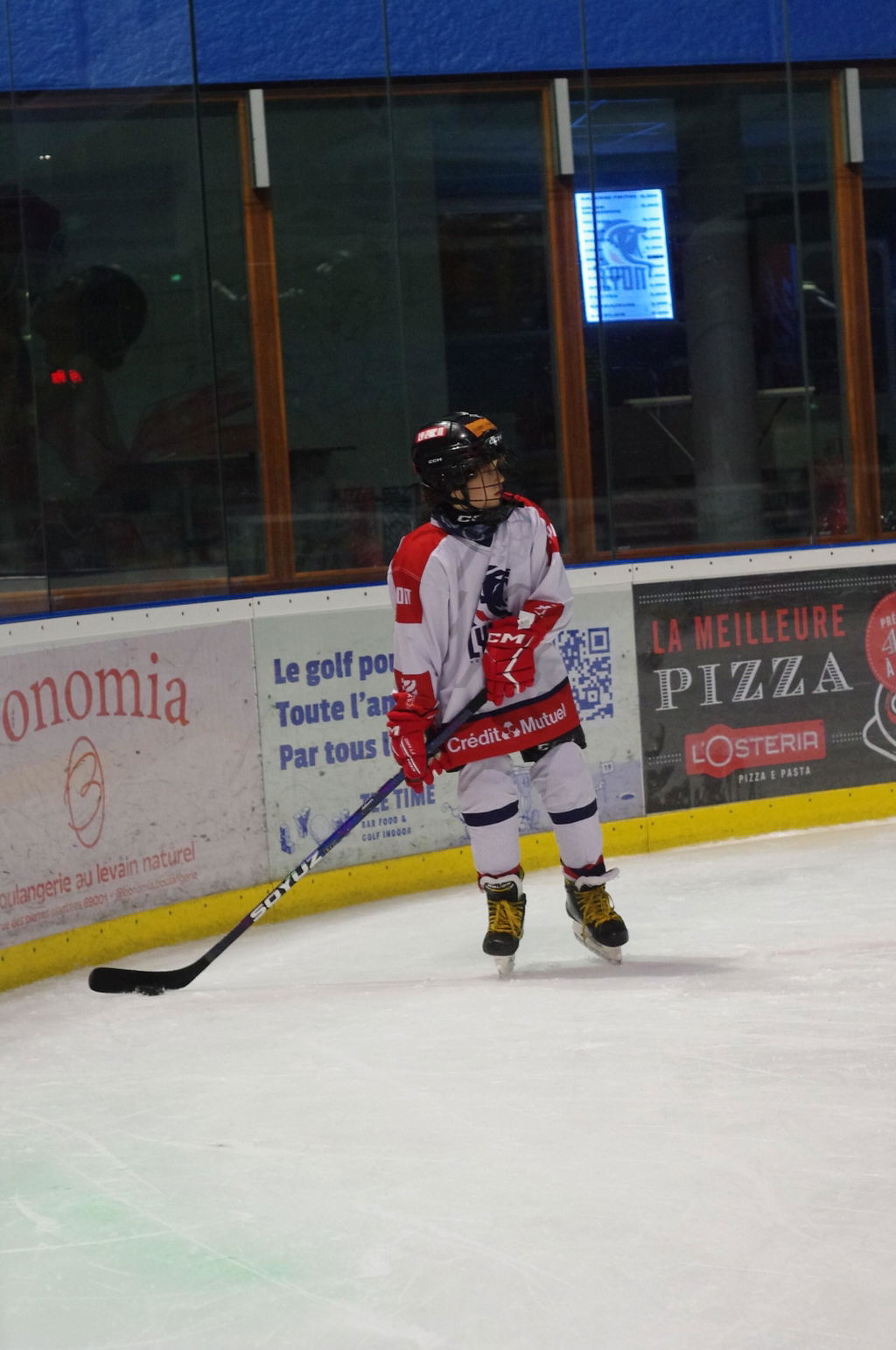
P28 vs P29 (and P92): Which Curve Is Right for You? Measured Side by Side
Last updated: November 15, 2026 · by Andri Farrer
P28 or P29? That's the question we hear in the shop more than any other. No surprise: together with their Max versions, these two blades make up roughly 70 percent of all SOYUZ sticks ordered from us. The good news: you can't go wrong with either. The better news: the difference is measurable – and in two minutes you'll know which blade fits your game.
The short answer
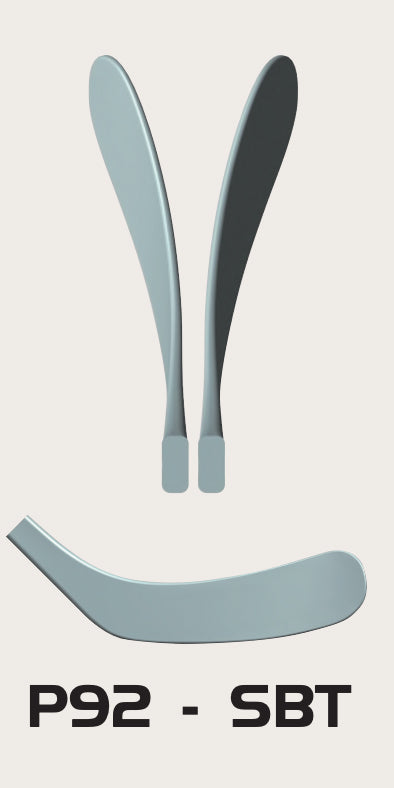
P29 (= P92): Mid curve. The curve starts earlier and is spread across the whole blade. Forgiving on passes, receiving, backhands and one-timers. The all-rounder.
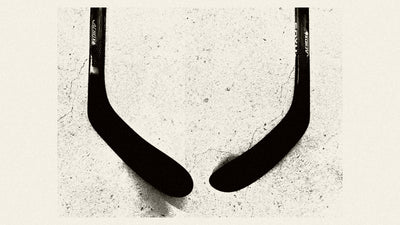
P28: Toe curve. Almost the same amount of curve at the toe, but flatter in the middle and about 12 mm shorter. Quick release off the toe, toe drags, getting the puck up. The sniper blade.
Not sure? Go P29. It's the most-picked blade at ABSHockey – and the easier of the two.
P29 and P92: Are They the Same Blade?
Yes. "P92" is Bauer's name, "P29" is CCM's, and Warrior calls it W03. If you google "is P29 the same as P92", we give you a clear yes – and not from a catalog, but from the CAD data: in the 3D Curve Lab, P29 and P92 are 0.2 degrees apart in mid offset and 0.3 degrees apart at the toe. That's the same basic shape. So everything in this article applies to P28 vs P92 too.
At SOYUZ we recommend the P29 to Bauer P92 players – you can order it as a custom on every model from a single stick, and it's in stock on all seven senior models. More on the mid curve in the P92/P29 guide.
P28 vs P92: What Changes If You're Coming From a Bauer P92?
"P92 vs P28" has become one of the most common searches that brings players to us. No surprise: if you've played a Bauer with a P92 for years and then see the P28 on Pastrnak's stick, in the locker room or in the shop, you want to know whether switching is worth it. The answer is in five numbers:
| Value | P28 | P92 | What it means |
|---|---|---|---|
| Blade length | 273.1 mm | 287.7 mm | P28 almost 15 mm shorter |
| Height | 74.1 mm | 74.8 mm | practically the same |
| Curve depth | 11.2 mm | 11.5 mm | practically the same |
| Mid offset | 5.6° | 6.2° | P92 curves earlier |
| Toe offset | 11.6° | 10.9° | P28 is more open at the toe |
In other words: the P28 isn't "more curved" than the P92. It's shorter and puts its curve further toward the toe. Compared with the P92 you lose almost 15 mm of blade – more than compared with the P29. Coming from a Bauer P92, you'll feel it first on hard passes and on the backhand – and on the release off the toe, which gets quicker and steeper.
My advice: if you're happy with the P92 and simply want more shot, don't switch because of a name. Get the P29 – that's the P92 shape, in stock on all seven senior models. But if the P92 feels too long and too "round", you shoot a lot from the slot and love toe drags, the P28 is exactly the step you're looking for. Lay the two over each other in the Curve Lab and you'll see the length difference right away.
And in case you're wondering whether you're alone with that switch: over the last three weeks, the P28 was actually our most-ordered blade – 31% vs 27% for the P29 (105 SOYUZ player sticks, Oct 12 – Nov 2, 2026).
The Measurements: Where P28 and P29 Actually Differ
Marketing copy says "toe curve" and "mid curve". True, but it doesn't explain why. The values below are CAD-measured on the standard version of each blade (source: our 3D Curve Lab). "Mid offset" shows how early the curve kicks in, "toe offset" how far the toe ends up from the shaft axis – both offsets as angles in degrees.
| Curve | Length mm | Height mm | Mid offset ° | Toe offset ° |
|---|---|---|---|---|
| P28 | 273.1 | 74.1 | 5.6 | 11.6 |
| P29 | 285.3 | 74.2 | 6.4 | 11.2 |
| P92 (for comparison) | 287.7 | 74.8 | 6.2 | 10.9 |
Three things stand out:
1. At the toe, they're almost identical. 11.6° vs 11.2° – that's not a difference you'll feel at the end of the curve. If you think the P28 is "way more curved", you're wrong.
2. The difference is in the middle. The P29 has 6.4° of offset there, the P28 only 5.6°. So on the P29 the curve starts earlier and runs evenly to the toe. On the P28 the blade stays flat longer and then hooks toward the toe. That's exactly the difference between a mid and a toe curve – in numbers.
3. The P28 is shorter. 273.1 mm vs 285.3 mm: a good 12 mm less blade. Less length means quicker hands and a more compact release, but also less surface for passing and the backhand. Height, on the other hand, is basically identical (74.1 vs 74.2 mm).

Overlay P28 and P29 in 3D →
Compare P28 and P92 in 3D →
What That Means on the Ice
| Situation | P28 | P29 / P92 |
|---|---|---|
| Wristers and snappers in motion | Very quick release off the toe, hard to read | Quick and controlled, puck rolls along the whole blade |
| Getting the puck up | Very easy – even tight to the net | Easy |
| Toe drags, tight moves | Its specialty | Good |
| Receiving (hard passes) | Demanding | Forgiving |
| Backhand | Tricky | Decent |
| One-timers and slappers | Works, but the puck rises fast | More stable, more blade behind the puck |
| New players / switching curves | Takes some getting used to | Almost no adjustment |
My take, no sugarcoating: the P28 won't automatically turn you into a sniper. It makes a good release quicker – and a sloppy pass sloppier. If you pass a lot, receive a lot and sometimes help out on the back end, you're better off with the P29. If you're a winger who lives to rip it from the slot, you'll love the P28.
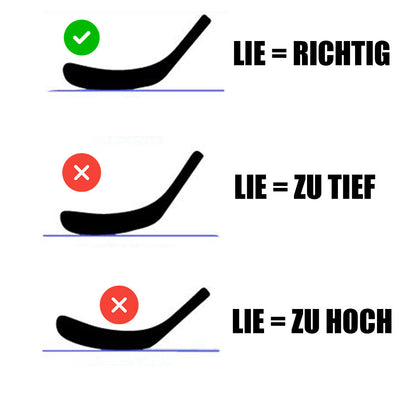
A detail people often forget: the P29 sits more upright than the P28 (higher lie). If you skate low over the puck, the P28 often sits flatter on the ice for you; if you stand taller, the P29 usually does. Why that matters is covered in the lie angle guide.
What Our Customers Pick
We crunched every SOYUZ stick ordered from ABSHockey in the last 90 days (custom and in stock, goalie sticks excluded; the P29M could still be ordered as standard from 1 stick during that period):
| Blade | Share |
|---|---|
| P29 | 26% |
| P28 | 24% |
| P86 | 11% |
| P92 | 9% |
| P90TM | 7% |
| P29M | 7% |
| P28M | 6% |
| all others | 10% |
Add up P29, P92 and P29M and the mid shape lands at 41%. The P28 family (P28 + P28M) comes in at 29%. Bottom line: seven out of ten players end up with one of these two shapes. The P29 is ahead, but barely – the P28 is no niche thing.
Who Uses What?
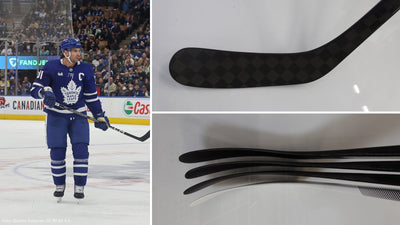
P28: The most prominent P28 in the NHL belongs to David Pastrnak. In stores the P28 is often called the "McDavid curve" – that's marketing. McDavid uses his own blade, not the retail P28.
P29: Nathan MacKinnon. Another myth here: the CCM P29 was sold as the "Crosby curve" for years, but Crosby himself uses a modified PM9. From Switzerland: Nico Hischier uses the P29, and Philipp Kurashev's Warrior has the W03 shape – so the P92/P29 family.
More important than any name: pros use pro stock blades, which often differ slightly from the retail version. What those specs are all about is covered in the article on dressed sticks and pro stock specs.
What About the Max Versions P28M and P29M?
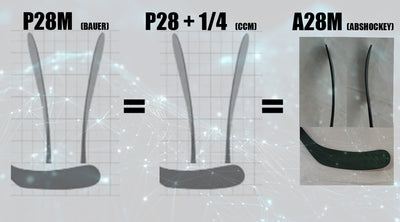
Both shapes also come with a taller blade. The P28M has practically the same curve (mid offset 5.7° / toe 12.1°) but is about 4 mm taller than the P28: 78.2 instead of 74.1 mm. More height gives you more surface for receiving and the backhand without changing the blade's character. D-men and bigger players especially like to go for the taller blade. At SOYUZ that now means: standard from a single stick are the P29 +1/4 (all models) and the P28M (all models except the CLASSIC SPR); the P29M and P28 +1/4 are available as Pro Custom from 3 sticks. The P92M is only available on the CLASSIC SPR. Everything about it in the article on P29 + 1/4, P92M and P28M and in the pros and cons of Max blades.

Self-Check: Which Blade Is Right for You?
| If you … | go with … |
|---|---|
| are a winger and shoot a lot from the slot or in motion | P28 |
| love to dangle and carry the puck on the toe | P28 |
| are a center and pass and receive a lot | P29 |
| are a D-man (one-timers, backhand passes, slappers) | P29 or P29 +1/4 |
| have been using a Bauer P92 or CCM P29 | P29 – you won't notice any difference in shape |
| are a beginner or gearing up a kid | P29 |
| like the P28 but want more control | the P90TM as the middle ground |
Still undecided on flex, kick point and model? The Stick Finder recommends the right SOYUZ model in five questions. And if you want to weigh things by position: Which stick fits your position?
Which SOYUZ with P28 or P29?
This is where it gets nice and simple: P28 and P29 are in stock on all seven SOYUZ senior models – ARCANE, RAPID, AURORA, STD PRO, HIT GRIT, MASTER FRST and CLASSIC SPR – plus several intermediate and junior models. Order by 2 pm and your stick usually arrives the next day in Switzerland. Which flex options are available right now, you can see directly in the in-stock collection.
Want a different flex, a specific length, your name on the shaft or a taller blade? Configure your custom stick: P28, P29 and their taller versions P28M and P29 +1/4 are available on every model from a single stick (the P28M except on the CLASSIC SPR); the P28 +1/4 as Pro Custom from 3 sticks, the P92M only on the CLASSIC SPR. Delivery time 4–6 weeks. And if you've been using Bauer or CCM: the model equivalents are in SOYUZ vs. Bauer, CCM & Co.
P28 or P29 – made up your mind?
In stock and ready to ship, or as a custom stick with your flex, your length and your name.
Shop in stock →Build a customStick FinderSwitching: From P29 to P28 (and Back)
If you switch from the P29 to the P28, you'll notice it first when receiving passes: early on, the puck tends to bounce off the blade, because the middle is flatter and the blade is shorter. Give it a few practices before you judge. Your shot will go higher than you're used to at first – that's the toe, not your wrist. The other way around, the P29 feels "sluggish" at first after the P28, but your passes land right away. Our tip: if you're not sure, order two in-stock sticks, one with a P28 and one with a P29 – from two sticks you get 5% off plus a free tape anyway.
FAQ: P28 vs P29
Is the P29 the same as the P92?
Yes. P92 is Bauer's name, P29 is CCM's name for the same mid curve. In a CAD comparison the two are 0.2 to 0.3 degrees apart.
What is the difference between the P92 and the P28?
The P28 is almost 15 mm shorter and curves further toward the toe; the P92 curves earlier and more evenly. Depth and height are practically the same. The P28 gets the puck up faster, the P92 is more forgiving on passes and on the backhand.
Which blade is better for beginners?
The P29. It's more forgiving on passes, receiving and the backhand. You can work your way up to the P28 later.
Which blade is better for defensemen?
Usually the P29 or the taller P29 +1/4: more blade behind the puck on one-timers and slappers, a more reliable backhand. That said, offensive D-men who shoot a lot of wristers from the blue line do fine with the P28 too.
Is the P28 the McDavid curve?
Only in marketing. The best-known P28 in the NHL belongs to David Pastrnak. Everything about the P28 itself is in the P28 guide.
Does the P28 lift the puck more?
It gets it up faster, because the release happens at the toe. For low, hard shots you need more wrist control with the P28.
Are P28 and P29 available for juniors and kids?
Yes. Both come in junior and intermediate, some straight from stock. For kids we recommend the P29. How long and how soft the stick should be is covered in the parents' guide.
Are both blades available for lefties and righties?
Yes, P28 and P29 come in LH and RH – in stock and as a custom.
More Curve Guides
- P28 curve explained – the Pastrnak curve in detail
- P92 / P29 – the most versatile curve in hockey
- P90TM – the mix of P28 and P92
- P88 – the most balanced curve
- Hockey curve guide: which blade is right for you?
- Which flex is right for you?
Next step: Overlay P28 and P29 in the 3D Curve Lab – then you'll know.

 SOYUZ AURORA
 SOYUZ HIT GRIT
 SOYUZ ARCANE
 SOYUZ STD PRO SR